Blog

  • Best Ways to Improve Home Efficiency and Save Money

    Best Ways to Improve Home Efficiency and Save Money

    Did you know the average American household loses nearly 20% of its energy? This is due to drafty windows and poor insulation. This waste often goes unnoticed but greatly affects your monthly bills.

    You don’t need a big budget for real changes. This guide offers the best ways to improve home efficiency with simple steps. We give you practical advice for meaningful results without overwhelming you with big projects.

    We start with quick, low-cost habits and then move to bigger upgrades. By focusing on home energy efficiency, you can make your home more comfortable and save money. Learn how easy changes can lead to big energy savings at home today.

    Key Takeaways

    • Start with small, low-cost habits to see immediate results.
    • Focus on sealing air leaks to prevent energy loss.
    • Upgrade to smart technology for better climate control.
    • Prioritize insulation to maintain a stable indoor temperature.
    • Track your progress to stay motivated on your conservation journey.

    Best Ways to Improve Home Efficiency: Start With Low-Cost Changes

    You can start saving money today with a few simple, low-cost changes. Many think energy-efficient home improvements need a big budget. But, small tasks can tackle common energy waste before big changes.
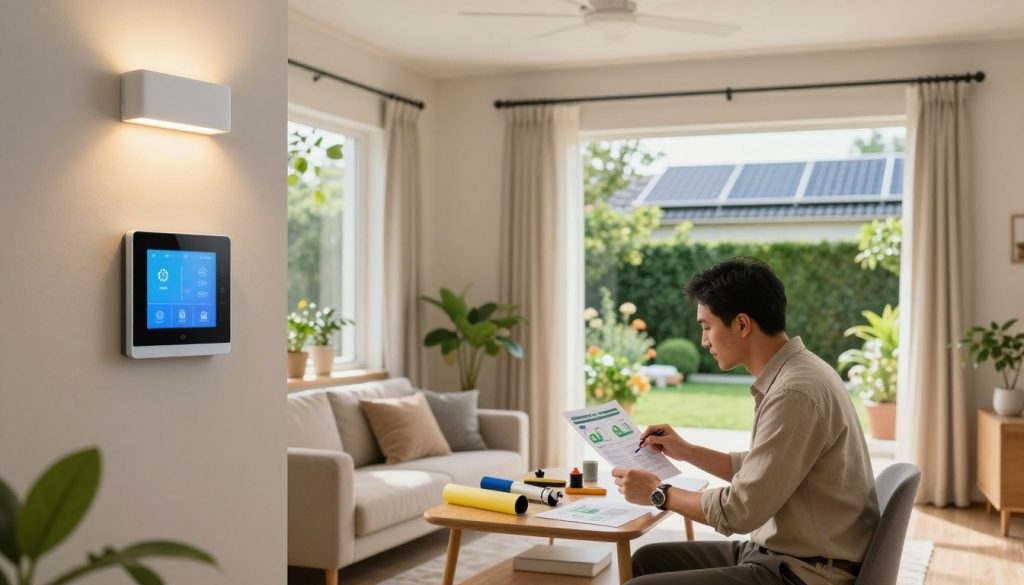
    A cozy, energy-efficient home interior showcasing low-cost upgrades. In the foreground, a bright, airy living room features energy-efficient LED light fixtures and a smart thermostat on the wall. The middle ground displays a window with well-insulated curtains and indoor plants that promote air quality. A professional consultant in smart casual attire examines an energy audit report while seated at a small table cluttered with tools for home improvement, such as weather stripping and low-flow faucet attachments. In the background, natural light streams through the window, highlighting a well-maintained exterior breezy garden with solar panels on the roof. The atmosphere is warm and inviting, suggesting a sustainable lifestyle while emphasizing practical home enhancements. Soft, natural lighting creates a peaceful and motivating environment.

    Seal Air Leaks Around Windows, Doors, and Utility Openings

    Drafty windows and doors can raise your energy bills. Fixing these gaps with inexpensive caulk or weatherstripping is easy. This stops conditioned air from escaping.

    Replace Incandescent Bulbs With LED Lighting

    Switching to LED bulbs is a top energy-saving upgrade. They use less electricity and last longer than incandescent bulbs. You’ll see your lighting costs drop right away.

    Use Smart Power Strips to Reduce Standby Energy

    Many devices draw power even when off, known as phantom load. Smart power strips cut power to unused devices. This simple step saves energy without effort.

    Adjust Thermostat Settings for Daily Savings

    Your heating and cooling system is a big part of your bill. Lowering your thermostat by a few degrees saves a lot. These low-cost energy-saving tips are easy and help you save over time.

    Upgrade Type Primary Benefit Difficulty Level Estimated Impact
    Weatherstripping Reduces air drafts Easy High
    LED Lighting Lowers electricity use Very Easy Medium
    Smart Power Strips Stops phantom loads Easy Medium
    Thermostat Adjustment Optimizes HVAC use Very Easy High

    Make Energy-Efficient Home Improvements That Deliver Long-Term Savings

    Upgrading your home with high-efficiency systems brings lasting environmental and financial benefits. Small changes help, but big renovations tackle your home’s core. These eco-friendly home improvements help control your indoor climate and cut down on utility use.

    A cozy, energy-efficient home nestled in a lush green landscape, showcasing solar panels on the roof and wind turbines in the distance. In the foreground, a vibrant vegetable garden thrives, surrounded by native plants that promote biodiversity. A warm, inviting atmosphere is created by soft, golden sunlight filtering through the trees, casting gentle shadows. In the middle ground, a well-insulated home features large windows allowing natural light to pour in, while a stylish rainwater collection system is visible. The background includes rolling hills under a clear blue sky, emphasizing sustainability and harmony with nature. The overall mood is tranquil and hopeful, illustrating the benefits of eco-friendly living.

    Upgrade Attic Insulation and Improve Air Sealing

    Your attic is a key thermal barrier for your home. Adding quality insulation keeps heat in winter and out in summer. Proper air sealing keeps conditioned air where you want it.

    Choose Energy-Efficient Windows or Add Window Treatments

    Windows are often a weak spot in your home’s thermal envelope. Double or triple-pane glass reduces heat transfer. If full replacement isn’t possible, high-quality shades or curtains are great green home efficiency solutions to cut energy loss.

    Install a High-Efficiency HVAC System and Maintain It Regularly

    Heating and cooling are big energy users. A modern, high-efficiency HVAC system heats or cools your home with less power. Regular maintenance, like changing filters and cleaning coils, keeps it running well.

    Replace Older Appliances With ENERGY STAR Models

    Old appliances use a lot of electricity. Look for the ENERGY STAR label when upgrading. These models save energy by using less water and power in every cycle.

    Use a Heat Pump Water Heater or Insulate Your Current Tank

    Water heating is a big expense. A heat pump water heater is more efficient than electric resistance heating. If you can’t replace it, insulating your tank helps keep heat in.

    “The most sustainable energy is the energy you do not use. By upgrading your home’s infrastructure, you are not just saving money; you are investing in a resilient future.”

    Improvement Type Primary Benefit Maintenance Level Comfort Impact
    Attic Insulation Thermal Retention Low High
    HVAC System Climate Control High Very High
    ENERGY STAR Appliances Power Efficiency Low Moderate
    Heat Pump Water Heater Lower Utility Bills Moderate High

    Practice Home Energy Conservation Every Day

    Changing your daily habits is a great way to make your home more energy efficient. Small, consistent actions can help reduce your environmental impact and save money. These home energy conservation tips are easy to add to your daily routine.

    Wash Clothes in Cold Water and Air-Dry Them When Possible

    Using hot water for laundry uses a lot of energy. Switching to cold water saves a lot of energy. Also, drying clothes outside when you can avoids using the dryer.

    Improve Refrigerator, Freezer, and Dishwasher Efficiency

    Kitchen appliances use a lot of energy all day. Clean the coils on your fridge to help it work better. Also, only run the dishwasher when it’s full to save energy.

    Reduce Water Heating Costs With Low-Flow Fixtures

    Low-flow showerheads and faucet aerators save hot water. They use less water without losing pressure. This means your water heater works less, saving you money.

    Use Ceiling Fans and Natural Ventilation Strategically

    Use nature to cool your home instead of air conditioning. Ceiling fans help in warm months. Open windows at night to cool your home naturally.

    Track Energy Use With Your Utility Dashboard or a Home Energy Monitor

    Knowing how much energy you use is key. Most utility providers have online dashboards for this. A home energy monitor gives even more detailed information.

    Conclusion

    Turning your home into a high-performance space starts with a plan. Begin with simple, low-cost changes to save money right away. These steps are the first step towards a greener lifestyle.

    Upgrading your home takes more thought but is worth it in the long run. Look at areas where your home loses comfort or needs a lot of upkeep. Investing in ENERGY STAR appliances and modern HVAC systems is a smart move.

    Keeping up with daily habits makes these changes last. Use your utility dashboard to see how you’re doing and find more ways to save. Your efforts will make your home more comfortable and save you money.

    Begin by improving one area of your home today. Share your progress with friends or family to encourage others. Your efforts will make your home more efficient and cozy for years.


    FAQ

    What are the best ways to improve home efficiency without a major renovation?

    Start with simple, low-cost changes. Seal air leaks around windows and doors with DAP caulk or Frost King weatherstripping. Replace old bulbs with Philips LED lights.
    Use smart power strips to cut down on energy waste from electronics. These steps can make a big difference without spending a lot.

    Which energy-saving upgrades for homes offer the best long-term comfort?

    Focus on your home’s envelope and major systems for lasting results. Upgrade attic insulation with Owens Corning materials. Install ENERGY STAR certified windows for better temperature control.
    Replace an old HVAC system with a Carrier or Trane system for long-term comfort. These upgrades are key to a greener, more efficient home.

    Do you have any daily home energy conservation tips for the laundry room and kitchen?

    Yes! Save energy by washing clothes in cold water with Tide detergent. Air-dry clothes when you can.
    In the kitchen, ensure your Samsung or LG fridge has good airflow. Only run your Bosch dishwasher when it’s full to save energy.

    How can a smart thermostat help me manage my energy use?

    Installing a smart thermostat, like a Google Nest or Ecobee, is smart. These devices learn your schedule and adjust the temperature when you’re away or asleep.
    This prevents wasting energy on an empty house. It’s a great way to lower your energy bills.

    What is the benefit of a heat pump water heater?

    A heat pump water heater, like a Rheem or A.O. Smith, is more efficient than electric tanks. It moves heat instead of generating it.
    It’s a bigger investment upfront, but it saves a lot of electricity. It’s a top choice for saving energy in your home.

    How can I track if my home energy conservation efforts are actually working?

    Most utility providers, like Duke Energy or Southern California Edison, offer online dashboards. You can see your usage hourly or daily.
    Install a home energy monitor like Sense. It attaches to your panel and shows which appliances use the most power. This helps you focus your efforts for better results.
  • Home Security Technology Explained to Protect Your Family

    Home Security Technology Explained to Protect Your Family

    Did you know a burglary happens every 30 seconds in the United States? This fact shows how important it is to protect your home. Choosing the right home security systems can seem hard, but you can make a good choice.

    This guide helps you understand home security technology to meet your needs. We’ll cover connected devices, smart detection tools, and automated alarms. You can pick the right setup for your home, budget, and comfort.

    We have seven smart steps to help you. By the end, you’ll know what to buy. Let’s build your peace of mind today.

    Key Takeaways

    • Understand the core components of modern protective setups.
    • Evaluate your property needs based on your unique budget.
    • Learn how automation enhances your daily comfort and safety.
    • Compare different detection tools to find the best fit.
    • Gain confidence in making smart, long-term purchasing decisions.

    Home Security Technology Explained: Seven Smart Ways to Protect Your Family

    Turn your home into a safe haven with these seven smart security tips. Modern tech lets you watch over your place easily. By picking the right tools, you create a strong defense for your family.

    Smart Security Systems That Connect Your Home

    Choose a Central Hub and Compatible Devices

    A central hub is the heart of your security system. It links all your devices for smooth communication. Make sure your hub works with your smart locks, lights, and sensors.

    Balance Professional Monitoring With DIY Home Security

    Decide between a self-monitored system or a professional service. DIY systems are flexible and save money. But, professional monitoring offers peace of mind with 24/7 help.

    A modern home security setup featuring sleek, high-tech security cameras mounted on both the exterior and interior of a stylish family home. In the foreground, a close-up of a state-of-the-art outdoor camera with night vision capabilities, capturing details of its polished metal casing and integrated LED lights. In the middle ground, the view extends to show the living room equipped with an indoor camera discreetly placed, blending seamlessly into the decor. The background reveals a serene neighborhood with well-kept houses under soft evening lighting, casting a warm glow. Emphasize a sense of safety and vigilance, creating an atmosphere that reflects peace of mind for families. Use a wide-angle lens for a comprehensive view, ensuring a well-lit but realistic setting that highlights the importance of home security technology.

    Security Cameras That Help You See What Is Happening

    Compare Indoor, Outdoor, Doorbell, and Floodlight Cameras

    Good security cameras keep you informed about your home. Indoor cameras watch over pets or kids. Outdoor cameras scare off intruders. Doorbell cameras check visitors, and floodlight cameras light up dark spots.

    Protect Video Privacy With Strong Accounts and Local Storage

    Keep your video privacy safe. Use strong, unique passwords and two-factor authentication. Also, consider storing your footage locally to control it yourself.

    Intrusion Detection Systems for Doors, Windows, and Open Spaces

    Use Contact Sensors, Motion Detectors, and Glass-Break Sensors

    Intrusion detection systems use different sensors to spot threats. Contact sensors alert you to open doors or windows. Motion detectors cover big areas, and glass-break sensors catch the sound of breaking glass.

    Reduce False Alarms With Strategic Sensor Placement

    Right placement stops false alarms. Don’t point motion sensors at heat sources like radiators or sunny windows.

    “The best security is invisible, reliable, and perfectly tuned to your daily life.”

    Burglar Alarms and Emergency Alerts That Get Attention

    Combine Sirens, Mobile Notifications, and Professional Response

    A loud siren is a strong deterrent in emergencies. Add mobile alerts so you’re always in the loop. If there’s a breach, help arrives fast.

    Build a Reliable Alarm Routine for Your Household

    Consistency is key for a safe home. Set a routine to arm your system every night. Teach your family how to use it right for full protection.

    Connected Features That Make Smart Home Security More Effective

    Your home needs a security plan that fits your life. Modern tech lets you create a safe space that works for you. It’s important to know how different parts of the system work together.

    Wireless Security Solutions for Flexible Installation

    Understand Wi-Fi, Cellular Backup, Battery Life, and Range

    Wireless systems give you freedom without the need for wires. But, your Wi-Fi must be strong to reach all sensors. Cellular backup ensures your system stays online, even without internet.

    Check your sensor batteries often to avoid coverage gaps. Keeping an eye on these levels is key to reliability. For big homes, use range extenders to cover every area.

    A futuristic smart home security system in a modern living room setting. In the foreground, a sleek, high-tech security panel displays live camera feeds. To the right, a smartphone sits on a stylish coffee table, showcasing a home security app with real-time notifications. In the middle ground, an automated drone hovers near a window, providing aerial surveillance, while a smart doorbell with facial recognition technology is mounted on the doorframe. The cozy, well-lit background features a family completing daily activities, conveying a sense of safety and comfort. The lighting is warm and inviting, with soft shadows, and the angle is slightly elevated, capturing the interconnectedness of the devices in a harmonious home environment. The atmosphere is serene yet secure, emphasizing functionality and innovation.

    Your smart home security is only as good as your passwords. Use strong, unique passwords for your router and security accounts. Adding two-factor authentication adds extra protection.

    Keep your devices updated with the latest security patches. This simple step helps prevent hackers from finding weaknesses in outdated software.

    Home Automation That Makes Your Home Look Occupied

    Use Smart Lights, Locks, Plugs, and Thermostats Together

    Home automation makes your home look lived-in, even when you’re away. Linking your smart devices creates a dynamic home environment. For example, you can set lights to turn on at sunset and adjust your thermostat to save energy.

    Create Schedules Without Sacrificing Safety or Privacy

    You can set up routines to make your home seem occupied. But, remember to keep your privacy in mind. Avoid sharing your travel plans on social media, even with automated systems protecting your home.

    How to Choose the Right Protection for Your Home

    Match Features to Your Property, Budget, and Household Needs

    Decide between DIY or professional monitoring based on your needs. DIY kits save money but require tech savvy. Professional services offer peace of mind without the hassle.

    Check Installation, Monitoring Fees, Compatibility, and Support

    Compare costs before choosing a brand. Look for hidden fees and the quality of support. The table below helps you compare options for your home.

    Feature DIY Systems Professional Systems
    Installation Self-installed Expert technician
    Monitoring Self-monitored 24/7 Professional
    Cost Lower upfront Higher monthly
    Support Online guides Phone/On-site

    Conclusion

    Creating a safe home needs a mix of new tech and smart planning. Use connected cameras, sensors, and smart lights to protect your place. This mix keeps your home safe from different dangers.

    Your perfect setup depends on your home’s layout, your budget, and your daily life. Many people like diy home security kits for their flexibility and simplicity. These kits let you grow your protection as your needs change.

    Before buying, check if your devices work well together. Look at the cost of monitoring, network security, and how reliable your alarms are. Choosing top-notch wireless security means your system works well in emergencies.

    The seven-step guide we shared helps you pick the best tech. Use these tips to create a system that keeps you calm every day. Your smart choices today make your home safer for your loved ones.

    FAQ

    What is the main difference between professional monitoring and DIY home security systems?

    DIY systems like SimpliSafe or Ring let you install and monitor on your phone. Professional services, such as ADT or Vivint, have a 24/7 center. They can call emergency services if your alarm goes off and you’re not there.

    How do wireless security solutions stay connected if my Wi-Fi goes down?

    Top wireless systems have a cellular backup. This means they can send alerts even without internet. Brands like Google Nest and Frontpoint include this in their plans.

    Are security cameras effective for privacy-conscious homeowners?

    Yes, they are. Look for cameras like Eufy or Wyze that store video locally. Always use two-factor authentication and keep your cameras updated for extra security.

    How does home automation contribute to a safer household?

    Home automation makes your home look occupied when you’re away. By linking smart devices, you can create routines that turn lights and TVs on and off. This confuses burglars and keeps your home safe.

    Which components are essential for effective intrusion detection systems?

    Start with contact sensors on doors and windows. Add motion detectors and glass-break sensors for more protection. This mix ensures your alarms work whether a door is forced open or a window is broken.

    Can I integrate different brands into one home security technology setup?

    Yes, you can mix brands over time. Make sure they work with a central hub like Amazon Alexa or Google Assistant. This lets you control all your devices with one app, making security easy for everyone.
  • Smart Home Technology Guide to Upgrade Your Living

    Smart Home Technology Guide to Upgrade Your Living

    Did you know that automated systems can cut your monthly bills by up to 20%? Modern living is changing fast. This Smart Home Technology Guide helps you stay up to date with these exciting changes.

    We’ve picked 10 easy upgrades for three main areas: greater comfort, stronger security, and improved energy savings. These upgrades are great for both beginners and seasoned fans. They will change your daily life for the better.

    Before starting your smart home installation, it’s key to think about each device carefully. This smart home technology guide guides you on what to consider. It helps you pick the best tools for convenience and value over time.

    Key Takeaways

    • Automated systems can lower your monthly energy costs by nearly 20%.
    • Focus on three main benefits: comfort, security, and energy efficiency.
    • Evaluate devices based on installation effort and daily utility.
    • Check for device compatibility before making a purchase.
    • Small, incremental upgrades often provide the best long-term value.

    Smart Home Technology Guide: Comfort Upgrades That Simplify Your Routine

    Imagine a home that knows what you need before you even get there. Home automation systems make your daily life easier. They handle the boring tasks, so you can enjoy the important things.

    A cozy modern living room seamlessly integrated with smart home technology. In the foreground, a sleek tablet displays various smart controls, with soft ambient lighting casting a warm glow. In the middle, a comfortable sofa, equipped with built-in smart features like USB charging ports and mood lighting, faces a large window showing a scenic view. Smart devices like a thermostat and security camera are subtly integrated into the decor. In the background, an open kitchen showcases smart appliances like a voice-activated coffee maker and a refrigerator with a built-in screen. The atmosphere is inviting, illustrating the ease and comfort of a smart home, captured from a slightly elevated angle to enhance the spaciousness. The lighting is natural, with sunlight streaming in to highlight the harmony between technology and everyday living.

    Automate Lighting With Smart Bulbs and Switches

    Lighting changes the feel of your home. But, you don’t need to flip switches anymore. Smart bulbs let you change brightness or color with your phone. You can even set them to turn on when you get home.

    Voice commands make your smart home automation even better. Just ask your virtual assistant to dim the lights for a movie or turn them off at night. It saves time and prevents wasting energy.

    Control Your Climate With a Smart Thermostat

    Keeping your home at the perfect temperature is key to comfort. But, heating or cooling an empty house wastes energy. A smart thermostat learns your habits and adjusts the temperature for you. You can control it from anywhere, making your home cozy when you arrive.

    These devices also save a lot of energy. They track your usage and help you use less. It’s a smart choice that can lower your bills.

    Add Convenience With Smart Plugs and Appliance Controls

    Smart plugs are the hidden gems of smart homes. They turn regular appliances into smart ones. You can set schedules or turn them off from anywhere with an app.

    They offer peace of mind and safety. Whether you want your coffee ready or need to turn off the iron, they make life easier. See how these upgrades compare in the table below.

    Upgrade Type Setup Difficulty Primary Benefit Energy Impact
    Smart Lighting Low Ambiance & Ease Moderate
    Smart Thermostat Medium Climate Control High
    Smart Plugs Very Low Remote Control Low

    Best Smart Home Devices for Security and Peace of Mind

    Your home should be a safe haven. The right tech adds a strong layer of protection. It keeps you updated on your home’s status at all times. With the right tools, you can watch over access points and spot dangers early.

    A modern living room showcasing the best smart home devices dedicated to security and peace of mind. In the foreground, a sleek smart security camera sits on a stylish console table, with a digital doorbell visible next to it. In the middle ground, a smart home hub displays a crystal-clear touchscreen interface, highlighting home monitoring features. Incorporate an automated smart lock on a grand front door, depicted with a soft glow from its LED indicator. In the background, a cozy sofa invites relaxation, with large windows revealing a serene outdoor setting. Use bright, natural lighting to create a welcoming atmosphere, with a shallow depth of field to gently blur the background, ensuring the focus remains on the smart devices in this safe, sophisticated space.

    Monitor Entryways With a Video Doorbell

    A video doorbell guards your front door. It lets you see who’s there, even when you’re not home. Choose one with clear video and good motion detection to catch everything.

    Protect Your Home With Smart Locks

    Smart locks make managing entry easy without keys. You can let people in through your phone. They also keep a log of who’s been in and out.

    Watch Indoor and Outdoor Areas With Security Cameras

    Cameras around your home scare off intruders. Today’s smart home security solutions have great night vision and can handle the weather. They send alerts to your phone for peace of mind.

    Detect Problems Early With Smart Smoke, Carbon Monoxide, and Water Sensors

    Keeping your home safe means more than just keeping out intruders. Smart smoke and carbon monoxide detectors alert you fast. Water sensors also warn you of leaks, saving you from big repair bills.

    Device Type Primary Benefit Key Feature
    Video Doorbell Visitor Verification Two-Way Audio
    Smart Lock Access Control Remote Locking
    Security Camera Constant Monitoring Night Vision
    Smart Sensors Hazard Detection Instant Alerts

    Choosing the best smart home devices means finding the right mix of features. Think about battery life and how easy they are to set up. Upgrading your home with these devices makes it safer and more convenient.

    Energy-Saving Home Automation Systems Worth Installing

    Want to save money and boost efficiency? Focus on energy-saving automation for your home. The latest smart home technology trends offer insights into your home’s power use. These upgrades save money daily, but savings vary based on usage and settings.

    “The greatest threat to our planet is the belief that someone else will save it.”

    Robert Swan

    Track Electricity Use With Smart Energy Monitoring

    Start by seeing how much energy you use. Smart energy monitors show your electricity use in real-time. They help you spot big power users and adjust to save money.

    Manage Irrigation With a Smart Sprinkler Controller

    Keep your lawn green without breaking the bank. A smart sprinkler controller adjusts watering based on weather. It skips watering on rainy days, saving water and money.

    Connect Every Device Through a Reliable Smart Home Hub

    A good hub connects all your devices smoothly. When comparing smart home devices, look for hubs that support Zigbee, Z-Wave, and Matter. This ensures your system grows reliably and easily.

    Feature Energy Monitor Smart Sprinkler Smart Hub
    Primary Benefit Cost Reduction Water Savings System Control
    Key Metric Kilowatt Usage Weather Data Device Sync
    Ease of Use High Medium High

    Consistency is key for an efficient home. Choose devices that work well together for a sustainable home. Make sure your hardware fits your network for a smooth experience.

    Conclusion

    Building a modern home doesn’t mean you have to change everything at once. You can make your home more comfortable, secure, and energy-efficient by choosing one device. Start with something simple like a smart plug or a video doorbell from brands like Ring or Google Nest.

    Before buying, do your homework. Check the privacy settings, monthly fees, and if it works with your Wi-Fi. It’s important for your devices to work together smoothly.

    Don’t rush to buy everything at once. Add devices as you need them. A smart thermostat from Ecobee or a lock from August could make a big difference. Small upgrades can make a big impact on your home.

    What part of your home do you want to upgrade first? Share your ideas or ask for advice. Your journey to a smarter home begins with one choice.

    FAQ

    What is the best way to start using a smart home technology guide to upgrade my living space?

    Start by thinking about what bothers you every day. Maybe it’s high bills or worrying about locking the door. Pick one easy upgrade, like a Google Nest Learning Thermostat or a Ring Video Doorbell. This way, you can add to your system bit by bit without feeling overwhelmed.
    Choose devices that fit your lifestyle and offer quick benefits. This makes your home smarter and more comfortable.

    Which devices are considered the best smart home devices for simplifying a morning routine?

    For a smoother morning, consider Philips Hue smart bulbs and TP-Link Kasa smart plugs. They make your home bright and your coffee ready when you wake up. These tools cut down on daily tasks and let you control your space with voice commands.
    Use Amazon Alexa or Google Assistant to make your mornings easier.

    How do smart home security solutions like video doorbells and smart locks improve safety?

    Smart home security gives you peace of mind by keeping an eye on your home. Devices like the August Wi-Fi Smart Lock and Arlo Pro cameras let you see who’s at the door and get alerts on your phone. They help spot dangers early, making your home safer.

    Can home automation systems really help me save money on my monthly energy bills?

    Yes, home automation systems can cut down on waste. Tools like the Rachio 3 Smart Sprinkler Controller and the Sense Energy Monitor help you see how much energy you use. They help you save money by making your home more energy-efficient.

    Do I need professional help for smart home installation, or can I do it myself?

    Most devices, like Ecobee thermostats or Schlage Encode smart locks, are easy for DIYers. Smart home installation is now simpler with apps that guide you step by step. But, think about your comfort with wiring before starting to ensure everything works right.

    What are the current smart home technology trends I should look for when buying new gear?

    Look for devices that work well with others, thanks to “Matter” support. This means different brands can work together smoothly. A strong Samsung SmartThings hub is key to keeping your system running smoothly.

    How should I perform a smart home devices comparison before making a purchase?

    When comparing devices, focus on setup, daily use, compatibility, and privacy. Check out brands like Lutron for lights or Eufy for cameras. This helps you decide between devices with fees and those that save money in the long run.
  • How to Reduce Home Energy Costs and Save Money Fast

    How to Reduce Home Energy Costs and Save Money Fast

    Did you know that nearly 25% of the power in an average American home is wasted? This happens when devices are left in standby mode. You can save money by using simple energy-saving tips that don’t need a professional.

    You don’t have to spend a lot on renovations to save. By using smart-meter data, adjusting your thermostat, and sealing air leaks, you can cut down on your electricity bills. Making small changes in how you use lighting, laundry, and dishwashers can make a big difference.

    This guide will show you practical strategies for quick results. We’ll also look at long-term investments like HVAC upgrades or ENERGY STAR appliances. Learning how to reduce home energy costs starts with these easy, daily habits.

    Key Takeaways

    • Identify and eliminate phantom power loads from electronics.
    • Adjust thermostat settings to optimize heating and cooling efficiency.
    • Seal air leaks around windows and doors to prevent drafts.
    • Use cold water for laundry to save on water heating expenses.
    • Monitor smart-meter data to track your daily usage patterns.
    • Prioritize high-impact behavioral changes before purchasing new equipment.

    How to Reduce Home Energy Costs with Fast, Low-Cost Changes

    Improving your home energy efficiency doesn’t need a big budget or complex changes. Many effective energy conservation strategies are simple. They involve small changes in behavior and maintenance tasks. These changes can lower your monthly bills quickly.

    A cozy living room filled with natural light, showcasing energy-saving changes. In the foreground, a professional-looking person in modest casual clothing adjusts a programmable smart thermostat on a wall. In the middle, a window adorned with thermal curtains complements a ceiling fan with energy-efficient LED bulbs illuminating the space. On a nearby table, a collection of energy-efficient appliances, such as a low-power coffee maker and an energy monitor, adds context to the scene. In the background, a lush indoor plant enhances the atmosphere, symbolizing eco-friendliness. The lighting should be warm and inviting, giving a sense of comfort while emphasizing practical, low-cost improvements in home energy efficiency. The overall mood is optimistic and proactive, encouraging viewers to make easy changes.

    Audit Your Highest Energy Uses

    Before buying new equipment, know where your energy goes. A DIY audit helps find out.

    Review Utility Bills and Smart-Meter Data

    Start by looking at your utility bills from the last year. This shows when energy use goes up. If you have a smart-meter portal, check your usage by the hour. This helps spot patterns, like high use at night or when you’re away.

    Identify Heating, Cooling, and Water-Heating Waste

    Heating and cooling use the most energy in most homes. Water heating is next. Check your HVAC filters and set your water heater to 120 degrees to save energy.

    Adjust Daily Habits That Lower Electricity Bills

    Small daily changes can save a lot of money. These energy-saving tips cost nothing but save a lot.

    Set Efficient Thermostat Temperatures

    Lowering your thermostat a few degrees can save a lot on bills. Keep it at 68 in winter and 78 in summer when home. A programmable thermostat helps set these temperatures automatically.

    Reduce Standby Power and Unnecessary Lighting

    Many devices use power even when off, known as “vampire energy.” Use power strips to turn off entertainment centers and offices. Also, turn off lights in unused rooms.

    Run Laundry and Dishwashers Efficiently

    Only run full loads in your dishwasher and washing machine. Washing clothes in cold water saves energy. Air-drying dishes and clothes saves even more.

    Stop Air Leaks Around Doors and Windows

    Drafty homes make your heating and cooling work harder. Sealing gaps is key to better energy use.

    Apply Weatherstripping and Caulk

    Check your windows and doors for air leaks. Use weatherstripping for moving parts and caulk for fixed gaps. These are cheap and easy to find at hardware stores.

    Improve Attic, Basement, and Crawl-Space Sealing

    Air leaks into homes through unfinished spaces like attics and crawl spaces. Use foam or insulation boards to seal gaps around pipes and wiring. This keeps conditioned air in and outside air out.

    Make Practical Upgrades for Better Home Energy Efficiency

    You can turn your home into a high-performance space with a few smart upgrades. These eco-friendly home improvements cut down your utility bills and boost your home’s value. By focusing on key systems, you make your home more comfy and green.

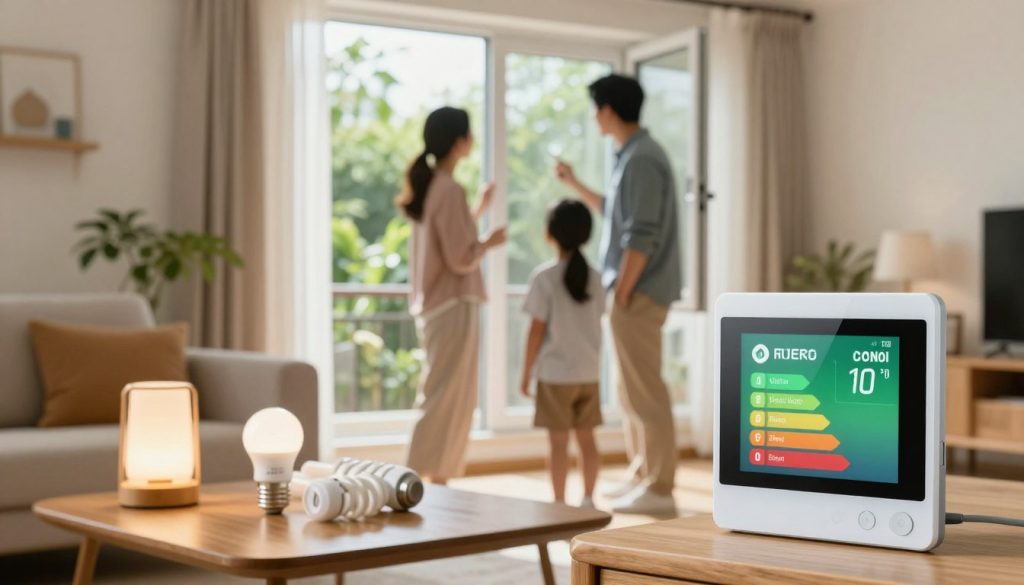
    A cozy living room filled with natural light, emphasizing home energy efficiency. In the foreground, a modern eco-friendly thermostat displays energy-saving settings on its screen. On a wooden coffee table, there's a solar-powered lamp and a collection of energy-efficient LED bulbs. In the middle, a family—two adults and a child—are inspecting an energy-efficient window, dressed in casual yet professional clothing. They discuss its features, highlighting the double glazing and thermal efficiency. In the background, lush greenery is visible through the window, symbolizing a connection to nature. The scene is warm and inviting, with a soft, diffused light coming from multiple sources, creating a bright but comfortable atmosphere. The angle captures both the family and the window, suggesting practical upgrades for better home energy efficiency.

    Improve Heating and Cooling Performance

    Replace HVAC Filters Regularly

    Your HVAC system works harder with a clogged filter. Replacing filters every one to three months improves airflow and saves your motor.

    Schedule Professional Maintenance

    Annual checks by a pro can catch small issues before they cost a lot. A well-maintained system saves you money all year.

    Use Ceiling Fans and Zoned Temperature Settings

    Ceiling fans let you raise your thermostat by four degrees without losing comfort. Zoned temperature controls also help, keeping only used rooms warm or cool.

    Choose Energy-Efficient Appliances

    Prioritize ENERGY STAR Refrigerators, Washers, and Dishwashers

    Look for the ENERGY STAR label when upgrading. These energy-efficient appliances use less electricity and water than standard ones.

    Compare Annual Energy Use Before Buying

    Check the “EnergyGuide” label to compare costs. A higher initial cost can be worth it for lower bills over time.

    Replace Older Appliances in the Right Order

    Start with your fridge, as it’s always on and uses a lot of energy. Then, replace your dryer and dishwasher for more savings.

    Appliance Type Average Annual Savings Lifespan (Years) Efficiency Rating
    Refrigerator $80 – $120 12-15 High
    Dishwasher $30 – $50 10-12 Medium
    Clothes Washer $40 – $70 11-14 High

    Upgrade Insulation and Windows Strategically

    Add Attic Insulation Before Replacing Windows

    Many people replace windows first, but attic insulation is more cost-effective. It acts as a thermal blanket for your home.

    Use Curtains, Blinds, and Solar Shades

    Window treatments help manage heat in summer and winter. Closing curtains in the hottest part of the day keeps your home cooler.

    Consider Storm Windows and Energy-Efficient Glass

    Storm windows add protection against drafts in cold climates. Energy-efficient glass coatings also help keep your home’s temperature stable.

    Reduce Water-Heating and Plumbing Energy Waste

    Lower the Water-Heater Temperature Safely

    Setting your water heater to 120 degrees is usually enough. This adjustment prevents scalding and saves energy.

    Install Low-Flow Showerheads and Faucet Aerators

    These devices reduce water use without losing pressure. They save on water bills and heating costs.

    Insulate Hot-Water Pipes and the Storage Tank

    Wrapping pipes in foam insulation prevents heat loss. An insulating blanket on your storage tank also improves efficiency, even in unheated basements.

    Use Smart Technology to Control Energy Consumption

    Install a Programmable or Smart Thermostat

    Smart thermostats adjust the temperature based on your schedule. They ensure you don’t waste energy when you’re not home.

    Use Advanced Power Strips for Electronics

    Many devices draw power even when turned off. Advanced power strips cut power completely when not in use.

    Monitor Whole-Home Energy Consumption

    Energy monitors show which appliances use the most power. This data helps you make choices to reduce your environmental impact.

    Conclusion

    Lowering your monthly bills starts with a clear plan. You can reduce utility expenses by auditing your energy use and fixing simple air leaks. Small changes to your daily habits and regular HVAC maintenance create a strong foundation for long-term savings.

    Focus your budget on the areas where your home wastes the most power. Prioritize upgrades like attic insulation, ENERGY STAR appliances, and low-flow plumbing fixtures. These eco-friendly home improvements pay for themselves over time while increasing your property value.

    Commit to sustainable living practices by integrating smart thermostats and efficient lighting into your routine. These energy conservation strategies work best when you track your consumption patterns regularly. Monitoring your progress keeps your goals measurable and keeps your household budget on the right track.

    Start your journey toward a more efficient home today. Small steps lead to big results for your wallet and the planet. Keep watching your utility bills drop as you refine your approach to home energy management.

    FAQ

    What is the most effective way to start learning how to reduce home energy costs?

    Start by doing a DIY audit of your energy use. Look at your bills from Duke Energy or Con Edison. Also, check your smart-meter data to find out when you use the most energy.
    See if your spending is mostly on heating, cooling, or water heating. This will help you know where to focus to save the most money.

    Which daily habits provide the best energy-saving tips for immediate results?

    Lower your electricity bills by adjusting your thermostat by 7–10 degrees when you’re away or asleep. Also, run full loads in your dishwasher and laundry machines.
    Turn off lights and electronics that use power even when not in use. These simple steps can save you money every month without costing anything upfront.

    How can I improve my home energy efficiency without a major renovation?

    Improve your home’s energy efficiency by sealing air leaks. Use Loctite caulk or Frost King weatherstripping around windows and doors.
    Don’t forget to check your attic, basement, and crawl spaces. Sealing these areas can greatly improve your home’s energy efficiency.

    How often should I maintain my HVAC system to reduce utility expenses?

    Keep your HVAC system in top shape by replacing your Filtrete filters every 90 days. If you have pets, change them once a month.
    Get a professional to check your system twice a year. Using Hunter ceiling fans can also help you save energy by keeping your home cooler.

    Are energy-efficient appliances worth the initial investment?

    Yes, they are. When it’s time to replace an old appliance, choose ENERGY STAR certified models from brands like Samsung or LG. They use less electricity and water than standard models.
    Always check the yellow energy use label before buying. This ensures you’re getting the most cost-effective option for your needs.

    Should I prioritize adding attic insulation or installing new windows?

    Most experts say to add attic insulation first. It’s more cost-effective and gives a better return on investment for energy efficiency.
    If new windows are too expensive, use heavy curtains, blinds, or Lutron solar shades. They can help manage heat gain and loss.

    What are some simple ways to reduce water-heating energy waste?

    Lower your water heater’s temperature to 120°F to save money and prevent scalding. Also, install Moen low-flow showerheads and faucet aerators to use less hot water.
    For more savings, wrap your hot-water pipes and tank in insulation. This reduces standby heat loss.

    How does smart technology support sustainable living practices?

    Smart thermostats like Google Nest or Ecobee let you control your home’s climate automatically. This saves money by not heating or cooling an empty house.
    Use advanced power strips to turn off electronics when not in use. Whole-home energy monitors help track your progress and improve your energy-saving efforts.
  • Energy Saving Tips for Your Home to Lower Bills Today

    Energy Saving Tips for Your Home to Lower Bills Today

    Did you know that nearly half of your average utility bill goes to keeping your home comfy? Many think you need expensive changes to save money. But, you can make a big difference with simple habits and small fixes.

    Using energy saving tips for your home helps you control your monthly costs. By tweaking how you use temperature, lights, and appliances, you make your home greener without losing comfort. These practical strategies show you where power is wasted and how to stop it fast.

    Looking to improve your HVAC or water heater settings? Small tweaks can make a big impact. By following these home energy efficiency tips, you’ll save money and keep your home warm and cozy all year.

    Key Takeaways

    • Heating and cooling account for the largest portion of your utility costs.
    • Small behavioral changes often yield the fastest financial results.
    • Regular maintenance of appliances prevents unnecessary power consumption.
    • Smart lighting choices significantly reduce electricity waste.
    • Adjusting water heater settings provides an easy way to lower monthly bills.

    Energy Saving Tips for Your Home That Cost Little or Nothing

    Many ways to save energy at home are simple. You don’t need to spend a lot or get professional help. Just making small changes can make a big difference in your energy use.

    A bright and inviting living room that illustrates various energy-saving tips for the home, featuring a cozy sofa with energy-efficient LED lamps on side tables casting a warm glow. In the foreground, a family member adjusts a smart thermostat on the wall. In the middle ground, a window shows natural light streaming in, highlighting indoor plants, while energy-efficient curtains are drawn to control heat. The background features a ceiling fan and a shelf with energy-saving appliances. The setting is well-lit with soft, natural light, evoking a sense of comfort and practicality. The atmosphere is cheerful and hopeful, promoting sustainable living without clutter or distractions.

    Seal Drafts Around Doors, Windows, and Utility Openings

    Air leaks can waste a lot of energy. You can find them by feeling for cool air near doors and windows. Using weatherstripping or caulk can help a lot.

    These items are cheap and easy to find at hardware stores. They help keep your home comfortable by stopping air from escaping.

    Adjust Your Thermostat When You Sleep or Leave Home

    Heating and cooling systems use a lot of energy. Lowering your thermostat by 7–10 degrees for a few hours can save a lot. It doesn’t make your home uncomfortable.

    Use Ceiling Fans to Improve Comfort Without Lowering the Thermostat

    Remember, ceiling fans cool people, not rooms. They make you feel cooler, so you can keep your thermostat higher in summer. Always turn them off when you leave a room.

    Wash Clothes in Cold Water and Air-Dry When Practical

    Using hot water for laundry uses a lot of electricity. Washing in cold water saves a lot of energy. Air-drying clothes when you can saves even more.

    Unplug Electronics and Eliminate Standby Power

    Many devices use power even when off. This “vampire energy” adds up over time. Using a smart power strip can save a lot of energy. It turns off all devices with one switch.

    Efficient Home Heating and Cooling Tips

    Controlling your home’s climate can cut down your utility bills. By using efficient home heating and cooling tips, you can keep your home comfy while saving energy. These tips help you reduce energy consumption in your home without losing comfort.

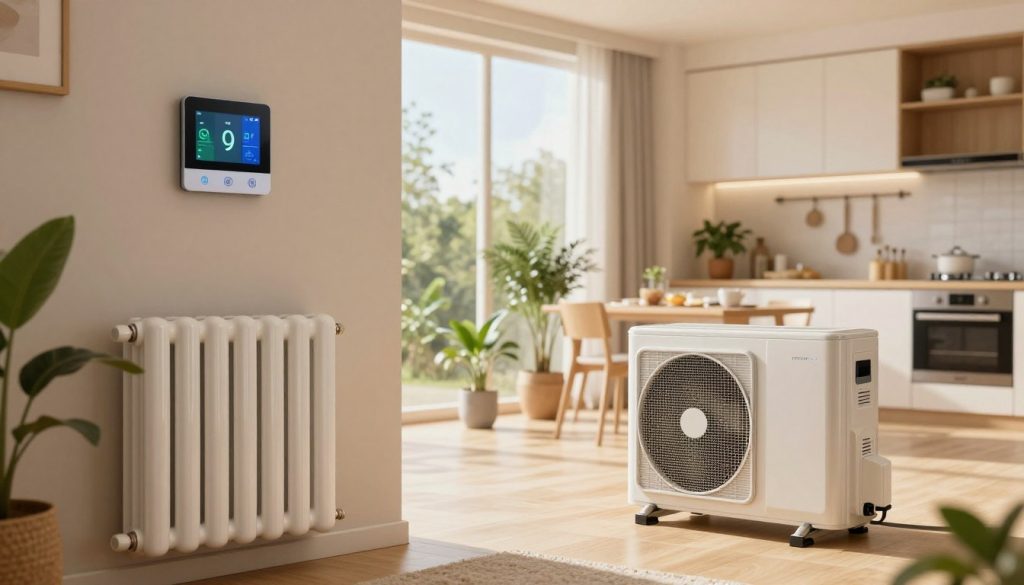
    A cozy, modern living room showcasing efficient home heating and cooling tips. In the foreground, a stylish energy-efficient radiator and a sleek, eco-friendly air conditioning unit, both in elegant designs. The middle features a large window with natural light streaming in, illuminating potted plants that contribute to indoor air quality. A digital thermostat mounted on the wall displays an energy-saving setting. In the background, a light-filled kitchen with energy-efficient appliances adds to the atmosphere of sustainability. Soft, warm lighting creates a welcoming mood, and the scene is captured from a slightly elevated angle to provide an expansive view of the room. Overall, the image conveys comfort, innovation, and eco-friendliness, emphasizing practical solutions for efficient home heating and cooling.

    Replace or Clean HVAC Filters Regularly

    Your HVAC system needs good airflow to work best. Check your air filters every month to avoid clogs. You might need to replace or clean them, depending on your home and filter type.

    Schedule Professional Heating and Cooling Maintenance

    Even with good care, your system needs a pro check-up yearly. A certified tech can find and fix issues that make your system work too hard. Regular maintenance keeps your system efficient, saving you money over time.

    “Properly maintained heating and cooling equipment lasts longer, performs better, and uses less energy to keep your home comfortable throughout the seasons.”

    Use a Programmable or Smart Thermostat Correctly

    A smart thermostat is great for managing your home’s temperature. Set it to adjust the temperature when you’re not home or asleep. This stops your system from heating or cooling an empty house, saving on energy bills.

    Improve Attic Insulation and Duct Efficiency

    Air leaks in your attic or ducts can waste conditioned air. Sealing these gaps makes your system more efficient. Proper insulation keeps your home at a steady temperature, saving energy.

    Choose Room-Specific Cooling and Heating Strategies

    You don’t need to heat or cool every room the same. Close doors to unused rooms to focus your system’s energy. This way, your system works better in the rooms you use most, reducing energy consumption in your home.

    Maintenance Task Frequency Primary Benefit
    Filter Inspection Monthly Improved Airflow
    Professional Tune-up Annually System Longevity
    Duct Sealing As Needed Reduced Energy Waste
    Thermostat Adjustment Daily Lower Utility Bills

    Energy-Efficient Home Ideas for Appliances, Lighting, and Water

    Turning your home into a green model starts with small daily changes. By using energy-efficient home ideas, you can help the planet and save money. Making simple changes to your lighting, water use, and appliances can make a big difference.

    Switch to ENERGY STAR LED Bulbs

    Improving your lighting is easy. LED bulbs use 75 percent less energy than old bulbs. They also last much longer, saving you money and time on replacements.

    Turn Off Lights and Use Daylight More Often

    One great eco-friendly home energy tip is to turn off lights when you leave a room. Use natural light by opening curtains or blinds. This cuts down on artificial light use and makes your home brighter.

    Run Dishwashers and Laundry Appliances Only with Full Loads

    Using your appliances fully is key to their efficiency. Running them with just a few items wastes water and energy. Always wait for a full load to save on resources.

    Set Your Water Heater to a Safe, Efficient Temperature

    Many water heaters are set too high. A safe temperature is around 120°F. This lowers energy use and keeps your water safe from scalding.

    Upgrade High-Use Appliances When Replacement Becomes Necessary

    When an appliance needs replacing, choose a more efficient one. Look for ENERGY STAR models to save energy and money. Investing in new tech is a smart long-term choice.

    Action Primary Benefit Difficulty Level
    Switching to LEDs Lower electricity use Very Easy
    Running full loads Water and energy savings Easy
    Adjusting water heater Reduced standby loss Moderate
    Buying ENERGY STAR Long-term efficiency Moderate

    Conclusion

    Small changes can make a big difference in your budget. You don’t need to spend a lot on big renovations. Simple habits can lead to a more efficient lifestyle.

    Try these energy-saving tips for your home to cut down on power use. Adjust your thermostat, seal drafts, and run full loads on appliances. These actions help save money over time.

    Improving your home lighting is also key. Switch to ENERGY STAR LED bulbs to use less electricity than old incandescent bulbs. This change makes your home brighter and saves on bills.

    Start with two or three changes today. Keep track of your energy use for a few months to see how you’re doing. Plan to replace old appliances when they need it. Your efforts will make your home comfortable and green for years.

    FAQ

    How much can I really save by adjusting my thermostat when I am away?

    Turning your thermostat back 7–10 degrees for eight hours a day can save a lot. This simple change can cut your heating and cooling bills by up to 10%. Using a smart thermostat like Google Nest or Ecobee makes it easy. It keeps your home comfy when you’re there and saves money when you’re not.

    Are LED bulbs actually better than traditional incandescent lighting?

    Yes, switching to LED bulbs is a big step towards saving energy. ENERGY STAR certified bulbs from Philips or GE Lighting use 75% less energy and last 25 times longer than incandescent bulbs. This change is quick and easy, helping you cut down on energy use at home.

    How often should I perform maintenance on my HVAC system?

    Keeping your HVAC system in top shape is key. Check your air filters every month and replace them every three months, or more if you have pets. Using quality filters and getting an annual tune-up from a pro are smart moves. They help your system work efficiently and avoid extra strain.

    What are the most effective ways to save energy at home without spending money?

    Many energy-saving tips are free. Start by washing clothes in cold water and air-drying them. Unplug electronics when not in use. Also, close curtains in summer and open them in winter to use the sun’s energy.

    Is it better to run the dishwasher or wash dishes by hand to save energy?

    Using an ENERGY STAR certified dishwasher is usually better than hand-washing. They use less water and heat it more efficiently. Just make sure to run full loads and use the “eco” or “air dry” setting.

    Where should I look first if I want to seal air leaks in my house?

    Start by checking your home’s “envelope.” Look for drafts around doors, windows, and utility lines. Use weatherstripping or caulk to seal these gaps. This keeps treated air inside and saves your heater or air conditioner from working too hard.

    What temperature should I set my water heater to for the best savings?

    Most water heaters come set to 140°F, but 120°F is better for most homes. This temperature provides enough hot water while reducing standby heat loss. It’s a simple change that can save a lot of energy.
  • Renters Insurance Explained What You Need to Know Today

    Renters Insurance Explained What You Need to Know Today

    Did you know that nearly 60% of apartment fires are caused by cooking accidents? Yet, many tenants think their landlord’s policy covers their stuff. This mistake can lead to big financial losses when disaster hits. Knowing what is renters insurance is key to keeping your peace of mind and protecting your belongings.

    This guide makes renters insurance explained easy to understand. We’ll cover how these policies protect your stuff, offer liability protection, and help with unexpected living costs. You’ll learn how to figure out what you need, compare plans, and pick the right coverage for you.

    Key Takeaways

    • Most landlord policies do not cover your personal belongings or liability.
    • Coverage typically includes protection for theft, fire, and water damage.
    • Liability protection helps if someone gets injured inside your home.
    • Policies are often very affordable, costing less than a streaming subscription.
    • Comparing quotes helps you find the best balance between price and coverage.

    Renters Insurance Explained: What Your Policy Does

    A standard renters policy protects your stuff and your financial well-being. Your landlord’s insurance covers the building, but not your personal items or legal responsibilities.

    What Is Renters Insurance and Who Needs It?

    If you rent an apartment, condo, or house, you need this insurance. Many think their landlord’s insurance covers their belongings. But it doesn’t.

    The main benefits of renters insurance are financial security against unexpected events. It’s good for students, young professionals, and retirees. It ensures you won’t have to pay a lot for big losses.

    How Renters Coverage Protects Your Personal Property

    Your renters coverage helps replace or fix your belongings if they’re damaged or stolen. Keeping an updated list of your items is key to getting enough coverage.

    A serene living room scene showcasing the concept of renters insurance. In the foreground, a young professional couple sits at a wooden table, reviewing paperwork and a laptop, dressed in smart casual attire. On the middle shelf, items like a laptop, a bike helmet, and a pair of sneakers represent personal belongings that are covered by renters insurance. The background features a cozy sofa adorned with cushions, a window letting in soft, warm light, and a few potted plants, enhancing the inviting atmosphere. The lighting is bright and cheerful, creating a sense of security and assurance. The overall mood is calm and focused, reflecting the idea of understanding and managing renters coverage.

    Covered Losses Such as Theft, Fire, and Water Damage

    Most policies cover your items against a list of “perils.” These include common disasters like:

    • Fire and smoke damage that ruins your furniture or clothes.
    • Theft of your electronics, jewelry, or bicycles, even if they are stolen outside your home.
    • Water damage caused by burst pipes or leaking appliances.

    Replacement Cost Versus Actual Cash Value

    When you file a claim, the payout depends on your policy. You can choose between two valuation methods:

    • Replacement Cost: This pays for a brand-new version of your item today.
    • Actual Cash Value: This pays the current market value of the item, considering depreciation.

    Liability Coverage for Accidents in Your Rental

    Liability protection is a key part of your rental insurance. It protects you if someone gets hurt at your place or if you accidentally damage someone else’s property.

    Medical Payments and Legal Expenses

    If a guest trips and gets hurt, your policy can cover their medical bills. It also helps with legal costs and judgments if you’re sued due to an accident.

    Additional Living Expenses After a Covered Loss

    After a disaster, your rental insurance covers “loss of use.” This helps pay for temporary housing and extra expenses. It gives you essential peace of mind during a tough time.

    How Much Rental Insurance Costs and How to Choose Coverage

    Knowing what your policy covers is key. It’s not just about the price. Finding the right rental insurance means balancing your budget with the value of your belongings.

    What Determines Your Renters Insurance Premium?

    Location, Deductible, Claims History, and Coverage Limits

    Your premium depends on several factors. Where you live is a big factor. Areas with bad weather or high crime rates cost more for renters policy.

    Your deductible choice affects your monthly rate. A higher deductible means lower premiums, but a higher upfront cost. Your claims history and coverage limits also play a role in the final cost.

    A professional and inviting office setting focused on rental insurance. In the foreground, a diverse group of three people—two men and one woman—are engaging in a discussion, dressed in smart business attire, while reviewing an insurance policy document spread across a polished wooden table. In the middle, an open laptop displays an insurance calculator, surrounded by charts and graphs illustrating coverage options and cost comparisons. The background features a large window with natural light streaming in, showcasing a cityscape. The overall atmosphere is collaborative and informative, with warm yet professional lighting highlighting the participants' thoughtful expressions, conveying a sense of trust and reassurance in making informed decisions about rental insurance.

    Ways to Lower Your Monthly Rental Insurance Cost

    Lowering costs is possible. Bundling with auto insurance can help. Safety features like smoke detectors and security systems also get you discounts.

    What Renters Policies Usually Exclude

    Floods, Earthquakes, Pest Damage, and Maintenance Problems

    Standard policies don’t cover everything. They exclude floods, earthquakes, and pest damage. It’s important to know this.

    Damage from poor maintenance or wear and tear is your responsibility. Report issues to your landlord to avoid denied claims.

    When You May Need Separate Policies or Endorsements

    If you live in a high-risk area, you might need extra policies for floods or earthquakes. For valuable items like jewelry or art, add an endorsement to your tenant insurance.

    How to Set Personal Property and Liability Limits

    Creating a Home Inventory for Your Belongings

    To set the right limits, make a detailed home inventory. List your electronics, furniture, and clothes. Keep receipts or photos to prove their value.

    Checking High-Value Items and Policy Sub-Limits

    Standard policies have sub-limits for things like cash or collectibles. Check these limits to see if you need extra rental property coverage for your most valuable items.

    How to Compare Apartment Insurance Quotes

    Reviewing Deductibles, Exclusions, and Claims Service

    Don’t just look at the price when comparing quotes. Consider the quality of claims service and exclusions in the fine print.

    Feature Tenant Insurance Landlord Coverage
    Primary Focus Personal Belongings Building Structure
    Liability Guest Injuries Property Damage
    Coverage Your Assets Landlord’s Assets

    Understanding Your Landlord’s Insurance Versus Tenant Insurance

    Your landlord’s insurance only covers the building. It doesn’t protect your personal items or provide liability for accidents in your unit. Getting your own renters policy is the only way to protect against financial loss.

    Conclusion

    Understanding your renters insurance is key to protecting your lifestyle. It helps you safeguard your belongings and manage unexpected costs. Renters insurance offers more than just replacing lost items. It also covers liability and helps with living expenses during emergencies.

    Take action to feel secure today. Make a detailed list of your belongings. This will make filing claims easier if disaster hits your apartment.

    Look for the best deals by comparing quotes from State Farm, Geico, or Lemonade. Make sure your policy covers the value of your items. Also, check if you need extra coverage for valuable items like jewelry or electronics.

    Getting renters insurance is a wise choice for any tenant. Use this information to create a safety net that suits your needs. Your efforts now will help you live more securely in the future.

    FAQ

    What is renters insurance and why is it necessary if my landlord has a policy?

    Renters insurance is a special coverage for people who rent homes. Many think their landlord’s policy covers their stuff. But, it only protects the building, not their personal items.
    You need your own policy to protect your belongings, like laptops or furniture. It also offers personal liability protection if someone gets hurt in your home.

    What are the primary benefits of renters insurance?

    Renters insurance offers more than just replacing stolen items. It has three main parts: protecting your stuff, covering liability, and helping with extra living costs. For example, if a pipe bursts, your policy might cover a hotel stay while repairs are done.

    Does apartment insurance cover high-value items like jewelry or professional camera gear?

    Apartment insurance usually covers most items, but high-value ones have “sub-limits.” If you have something very valuable, like an expensive ring, you might need extra coverage. This ensures you get back the full value of your item.

    How can I find the most affordable tenant insurance rates?

    To get cheaper rates, try bundling your tenant insurance with auto insurance. Also, choosing a higher deductible can lower your costs. Companies like Lemonade offer affordable rates for basic coverage.

    What is the difference between replacement cost and actual cash value?

    Replacement cost coverage pays for a new item at today’s prices. Actual cash value pays what the item was worth at loss, minus wear and tear. Experts say to choose replacement cost to avoid financial loss after a claim.

    Are natural disasters like floods or earthquakes covered by my renters policy?

    Most policies don’t cover floods or earthquakes. If you live in a high-risk area, you need extra coverage. Your basic policy covers fire and windstorms, but not these disasters.
  • Homeowners Insurance Basics Every US Homeowner Should Know

    Homeowners Insurance Basics Every US Homeowner Should Know

    Did you know almost 95% of Americans have a policy for their property? Yet, many can’t explain what it covers. Understanding homeowners insurance basics is key to protecting your biggest asset.

    Your home insurance coverage protects your home, belongings, and you from lawsuits. It also covers temporary living costs if you can’t stay in your home. But, you must read your policy carefully.

    Every policy has its own limits, deductibles, and things it doesn’t cover. Knowing these details keeps your family safe when unexpected things happen. By taking charge of your policy now, you avoid big surprises later.

    Key Takeaways

    • Understand that your policy protects both your physical structure and your personal items.
    • Liability protection is a critical component that guards your assets against lawsuits.
    • Always review your deductible amounts to know your out-of-pocket costs during a claim.
    • Check for specific exclusions in your policy to avoid gaps in your protection.
    • Temporary living expenses provide essential support if your home becomes uninhabitable.

    Homeowners Insurance Basics: What Your Policy Protects

    Your homeowners insurance is more than a must-have. It’s a comprehensive shield for your financial future. These property protection plans are designed to cover every part of your home and lifestyle.

    A cozy suburban home with a well-maintained yard in the foreground, showcasing symbols of protection such as a shield or lock integrated into the house design. In the middle ground, visualize a pathway leading to the front door, flanked by a small garden, symbolizing safety and security. In the background, a clear blue sky and a few fluffy clouds create an uplifting atmosphere, while soft sunlight bathes the scene, highlighting the inviting nature of the property. A professional individual in modest casual clothing can be seen reviewing a homeowners insurance document by the door, symbolizing the importance of understanding protection plans. The overall mood should convey peace, security, and reassurance, emphasizing the essence of homeowners insurance coverage.

    Dwelling coverage pays to repair or rebuild your home

    This is the core of your policy. It covers your home’s structure, like the roof and walls. It also includes built-in appliances if they’re damaged by things like fire or windstorms.

    Other structures coverage protects detached property

    Many forget that their policy covers more than just the main house. This includes detached structures like:

    • Detached garages
    • Storage sheds
    • Fences and gates
    • Gazebos or guest houses

    Personal property coverage safeguards your belongings

    Your property protection plans also cover your home’s contents. This includes furniture, clothes, electronics, and more. It helps if these items are stolen or damaged by a covered event.

    Liability insurance for homeowners helps with injury and damage claims

    Liability insurance for homeowners is for when accidents happen. It protects your assets if someone gets hurt on your property. It also covers damage to someone else’s property if you or a family member are responsible.

    “Insurance is not just about paying premiums; it is about securing your peace of mind when the unexpected occurs.”

    — Financial Planning Expert

    Additional living expenses support you after a covered loss

    If a disaster makes your home uninhabitable, you need a place to stay. This coverage, often called “loss of use,” pays for temporary housing. It also covers hotel bills and meals while your home is being fixed.

    Check whether coverage uses replacement cost or actual cash value

    It’s important to know how your insurer calculates payouts. Replacement cost covers the cost of new items or rebuilding at today’s prices. It doesn’t consider the item’s age.

    Actual cash value subtracts depreciation from the item’s original cost. This means you might get less money for older items. Always check your policy declarations page to see which method applies to your coverage.

    Key Policy Features That Affect Your Protection and Costs

    Your homeowners insurance is more than just a document. It’s a vital safety net that needs careful setup. Knowing the insurance policy features in your plan helps balance strong protection with affordable costs.

    Learn how dwelling coverage limits are calculated

    When setting your policy, focus on rebuilding your home’s cost. Many people use their home’s market value. But dwelling coverage limits should reflect today’s local labor and material costs.

    If disaster strikes, you need enough money for today’s contractors and supplies. Using market value can leave you underinsured if construction costs rise in your area.

    A visually engaging illustration depicting key features of homeowners insurance policies. In the foreground, a diverse group of three professionals in smart business attire—two men and one woman—analyzing documents and discussing. Their expressions are focused and engaged. In the middle ground, a detailed infographic-style representation shows icons symbolizing aspects of insurance such as coverage limits, deductibles, and liability protection. The background features a cozy, well-furnished home interior, softly lit with natural light streaming through windows, creating a warm and inviting atmosphere. The overall mood conveys professionalism and clarity, encouraging understanding of complex insurance concepts.

    Use an insurance deductible explanation to understand out-of-pocket costs

    An insurance deductible is the amount you pay before your provider covers the rest. Choosing a higher deductible can lower your monthly premiums.

    But, make sure you have savings for that amount if you file a claim. Higher deductibles mean you pay more out-of-pocket. Pick a deductible that fits your emergency fund.

    Review common exclusions, including floods, earthquakes, and maintenance problems

    Not all damage is covered by a standard policy. Most plans exclude damage from floods, earthquakes, and general wear and tear.

    Insurance is for sudden, accidental events, not for predictable maintenance issues. You should regularly inspect your home to prevent damage not covered by your policy.

    Consider endorsements for valuables, sewer backups, home businesses, and identity theft

    If your standard policy seems too limited, you can add endorsements. These optional add-ons provide extra protection for specific risks or high-value items.

    • Valuables: Extra coverage for jewelry, art, or collectibles.
    • Sewer Backups: Protection against water damage from pipe failures.
    • Home Businesses: Coverage for professional equipment and liability.
    • Identity Theft: Assistance with recovery costs and legal fees.

    Understand insurance premiums and the factors that influence them

    Your insurance premiums are based on various risk factors that insurers analyze. While you can’t change your location, you can improve other areas to lower costs.

    Compare location, claims history, credit-based insurance scores, and home safety features

    Insurers consider your neighborhood’s crime and weather risks to set your rate. They also look at your past claims and, where allowed, your credit-based insurance score to gauge risk.

    Factor Impact on Premium Actionable Tip
    Home Safety Lowers Cost Install smoke detectors and alarms.
    Claims History Increases Cost Avoid filing small, minor claims.
    Credit Score Varies Maintain a healthy credit profile.
    Dwelling Limits Increases Cost Review limits annually for accuracy.

    How to Compare Types of Homeowners Insurance and Home Coverage Options

    Finding the right balance between cost and coverage starts with comparing types of homeowners insurance. Every home is different. Knowing how different policies work helps you choose the best for your family.

    Compare the standard HO-3 policy with broader HO-5 coverage

    The HO-3 policy is common for single-family homes. It offers open-peril coverage for your home. This means it protects against all risks, unless they are specifically excluded.

    An HO-5 policy gives more protection for your home and belongings. Unlike an HO-3, which covers personal property on a named-peril basis, an HO-5 covers more. It’s a top choice for many homeowners.

    Explore HO-4 renters insurance and HO-6 condo insurance when applicable

    If you don’t own a single-family home, you still have important home coverage options. An HO-4 policy, also known as renters insurance, protects your personal items and offers liability coverage in a rented space.

    Condo owners usually have an HO-6 policy. This insurance works with the master policy from your homeowners association. It covers the inside of your unit and your personal liability.

    Match property protection plans to your home’s age, value, and risks

    When picking a plan, think about your property’s needs. Older homes might need special coverage for outdated systems that cost a lot to replace.

    High-value homes often need replacement cost coverage, not actual cash value. Also, consider location-specific risks like flood zones or wildfires to make sure your policy is enough.

    Choose liability limits that reflect your assets and personal risk

    Liability insurance is a safety net if someone gets hurt on your property. Choose limits that match your total net worth. This protects your savings and future earnings.

    “Insurance is not just a bill; it is a promise of protection for the things that matter most in your life.”

    Bundle policies and ask about discounts without sacrificing necessary coverage

    Many insurers give big savings if you bundle home and auto policies. Saving money is key, but don’t cut coverage to lower your premium.

    • Ask about security system discounts.
    • Inquire about loyalty rewards for long-term policyholders.
    • Review your deductible to see if a higher amount fits your budget.

    Compare declarations pages, exclusions, limits, deductibles, and endorsements side by side

    Before signing, make a simple comparison table. This helps you see what you’re getting. It ensures you’re not missing important details about what’s not covered.

    Feature HO-3 HO-5
    Dwelling Coverage Open Peril Open Peril
    Personal Property Named Peril Open Peril
    Best For Standard Homes High-Value Assets

    Update your policy after renovations, purchases, or major household changes

    Your insurance needs change over time. If you do a big renovation or buy expensive items, your policy might not be enough.

    Always tell your agent about big life changes. A yearly review of your types of homeowners insurance keeps your coverage up to date with your life.

    Conclusion

    Protecting your property is more than just signing a contract with companies like State Farm or Allstate. You need to actively manage your coverage. This ensures it fits your current life stage and financial goals.

    A clear insurance deductible explanation is key to managing risks. It’s the amount you pay before your provider covers the rest. Choosing a higher deductible can lower your monthly payments. But, make sure you have enough savings to cover it if disaster hits.

    Understanding insurance premiums means looking beyond the initial cost. Check your coverage limits, policy exclusions, and discounts. This helps build a strong safety net. Focus on the total value of your protection, not just the cheapest rate.

    Review your declarations page at least once a year. Talk to your agent about any gaps in your protection or new risks. Choosing the right plan gives you peace of mind. It ensures your assets stay safe, no matter what the future brings.

    FAQ

    What exactly are homeowners insurance basics, and why are they so important for me to understand?

    Homeowners insurance is a contract between you and an insurer like State Farm or Allstate. It protects your financial interests. It covers your home, belongings, and legal liability in case of accidents or disasters.
    Knowing these basics helps you avoid big costs for repairs or legal fees after an unexpected event.

    How do dwelling coverage limits differ from the market value of my home?

    Dwelling coverage limits are about rebuilding your home, not selling it. Companies like CoreLogic help estimate these costs. This ensures your insurance covers rebuilding your home exactly as it was.

    Can you provide a simple insurance deductible explanation?

    Sure! Your deductible is the amount you pay before your insurance kicks in. A higher deductible lowers your premium but means more out-of-pocket costs during a claim. A lower deductible means less upfront but higher ongoing costs.

    What are the different types of homeowners insurance available to me?

    There are many types of homeowners insurance. The HO-3 policy covers most perils, unless excluded. HO-5 policies offer more comprehensive protection for your home and belongings.
    Liberty Mutual and others offer HO-4 policies for renters and HO-6 policies for condo owners.

    Why is liability insurance for homeowners such a critical part of my policy?

    Liability insurance protects you if someone gets hurt on your property or if you damage someone else’s. It covers legal defense and settlements. Experts at Progressive suggest setting limits high to protect your assets.

    What specific property protection plans cover my belongings if I’m away from home?

    Most plans include “off-premises” coverage. This means your belongings are covered even if stolen from your car or a hotel. But, check your policy for limits on high-value items, as you might need an endorsement for full protection.

    Are there any home coverage options that help with extra costs if I can’t live in my house after a fire?

    Yes, there’s Additional Living Expenses (ALE) coverage. It helps cover extra costs like hotel stays and meals while your home is being repaired or rebuilt after a covered loss.

    How do insurers determine my specific insurance premiums?

    Insurers look at several factors to set your premiums. These include your home’s location, age, construction, claims history, and credit score. Installing safety features can also lead to discounts.

    Do standard policies cover floods or earthquakes, or do I need extra protection?

    Standard policies usually don’t cover floods or earthquakes. You need a separate policy from the National Flood Insurance Program (NFIP) or endorsements for your existing plan. Reviewing these exclusions is crucial for managing your insurance.
  • How to Compare Auto Insurance and Save Money Today

    How to Compare Auto Insurance and Save Money Today

    Did you know nearly 40% of drivers in the U.S. overpay for auto insurance? They never shop around. Many stick with the same provider for years, losing hundreds of dollars each year.

    Learning how to compare auto insurance is a smart move for your wallet. An online auto insurance comparison tool lets you see different coverage, deductibles, and service quality side-by-side. This way, you get the protection you need without extra costs.

    In this guide, we’ll show you how to accurately compare quotes. You’ll learn to balance your budget and keep your vehicle well-insured.

    Key Takeaways

    • Shop around annually to avoid the “loyalty tax” on your premiums.
    • Focus on coverage limits, not just the lowest monthly price.
    • Use digital tools to find better rates easily.
    • Review your deductible options to fit your budget.
    • Check company service ratings for reliable support when needed.

    How to Compare Auto Insurance for Better Coverage and Lower Rates

    Starting with a smart review of your options is key to financial security. A thorough auto insurance comparison helps you find the right protection for your vehicle, not just a low price.

    A split-screen visualization showcasing a peaceful, modern office environment on the left and a vibrant digital display on the right. In the foreground, a diverse group of professionals in business attire, including men and women, are engaged in an animated discussion over a laptop, analyzing auto insurance options. In the middle, the laptop screen displays comparison charts and graphs with icons representing different insurance companies and coverage types. In the background, the office features large windows with natural light streaming in, creating a warm atmosphere. Soft focus on the left side emphasizes collaboration while sharp detail on the right highlights data visualization. The mood is focused and collaborative, evoking a sense of clarity and professional engagement in the task of comparing auto insurance for better coverage and lower rates.

    Gather Your Current Policy Details Before Comparing Quotes

    First, find your current declarations page. It has important info on your coverage, deductibles, and premiums.

    Having this info ready helps you compare better. You’ll see what you’re paying for today and spot savings or needed upgrades.

    Compare the Same Liability and Property Damage Limits

    When comparing car insurance policies, make sure the limits are the same. A lower price without enough liability coverage isn’t fair.

    Check that your bodily injury and property damage limits meet your needs. Consistency is the key to finding the best value.

    Review Collision, Comprehensives, and Uninsured Motorist Coverage

    An effective auto insurance coverage comparison looks beyond basic liability. Check if your collision and comp coverage fits your car’s current value.

    Don’t overlook uninsured motorist protection. It’s a safety net if you’re hit by an uninsured driver.

    Choose Deductibles That Balance Premiums and Out-of-Pocket Costs

    Your deductible is what you pay before insurance kicks in. A higher deductible can lower your premium, but make sure you can afford it.

    Consider your savings and what you can afford in case of an accident. Finding the right balance is key for your financial health.

    Request Car Insurance Quotes From Multiple Insurers

    With your requirements set, get quotes from several providers. A car insurance quotes comparison should include at least three to five companies.

    Getting multiple quotes gives you a clear view of the market. This helps you make a smart choice based on real data, not guesses.

    Ways to Find the Best Auto Insurance Rates Today

    To find the best auto insurance rates, look beyond just the monthly cost. It’s a journey that needs careful planning and smart choices. By being proactive, you can get coverage that’s both affordable and reliable.

    A visually appealing scene showcasing the concept of finding the best auto insurance rates. In the foreground, a confident individual dressed in professional business attire is holding a laptop, displaying a visually informative chart comparing different auto insurance rates. The middle ground features a stylish table with documents and a calculator, symbolizing careful analysis. In the background, a bright office environment with large windows allows natural light to illuminate the scene, enhancing a productive atmosphere. The color palette is vibrant yet professional, incorporating shades of blue and green to evoke trust and stability. The overall mood is focused and optimistic, emphasizing the importance of making informed decisions to save money on auto insurance.

    Use Online Auto Insurance Comparison Tools Carefully

    Online tools are great for quick estimates. But, always check the final quote with the insurance company to make sure it’s right. Remember, these tools are just the start, not the final deal.

    Check Discounts for Safe Driving, Bundling, and Low Mileage

    Many insurers offer big discounts for bundling policies or safe driving. Ask about safe driving discounts or mileage tracking programs. If you drive less, you might get lower premiums right away.

    Ask How Your Credit, Driving Record, and Location Affect Rates

    Your personal details greatly affect your risk level. In many places, a better credit score can lower costs. A clean driving record is also key. Always ask how your zip code affects your premium.

    Compare Customer Service, Claims Satisfaction, and Financial Strength

    The cheapest policy isn’t always the best. Look for insurers with high claims satisfaction ratings and strong finances. You want a reliable partner during tough times.

    Look Beyond the Cheapest Auto Insurance Quote

    Just focusing on the lowest price can leave you unprotected. Check the policy’s value by looking at limits and carrier reputation. A slightly higher premium might offer more peace of mind.

    Recheck Your Policy After Life or Vehicle Changes

    Big life changes, like moving or getting married, can change your risk. Review your coverage after buying a new car or changing your commute. Keeping your info up to date helps keep your rates low.

    Factor Impact on Rates Action to Take
    Driving Record High Maintain a clean history
    Credit Score Medium-High Monitor and improve credit
    Bundling Medium Combine home and auto
    Annual Mileage Low-Medium Report accurate usage

    Conclusion

    Finding the right protection is more than just looking for the lowest price. You need to balance affordable premiums with strong claims support and financial stability.

    You now have the tools to check coverage limits, deductibles, and insurer reputations. By using these tools, you can control your budget and keep your vehicle safe.

    Always do a cheap auto insurance comparison when your life changes. This includes moving, adding a driver, or buying a new vehicle.

    Top providers like GEICO, State Farm, and Progressive can help adjust your plan as needed. Check your documents to see if your coverage fits your goals. Being proactive keeps your finances safe and your mind at ease.

    FAQ

    How do I start an effective auto insurance comparison to ensure I am saving money?

    To start, get your current declarations page from your current provider, like State Farm or Allstate. Make sure to compare policies with the same liability limits, property damage coverage, and deductibles. This way, you can see which company offers the best rates for you.

    Is it safe to rely on an online auto insurance comparison tool for my final decision?

    An online comparison tool, like The Zebra or Insurify, is a good first step. But remember, these are just estimates. After finding a good rate, visit the insurer’s website to confirm the details. Your driving record and credit history will affect the final price.

    What specific factors will influence my auto insurance rates comparison?

    Many personal factors affect your auto insurance rates. Insurers consider your driving history, credit score, and ZIP code. Your vehicle’s safety features and how much you drive also matter. A clean driving record can help you find a cheap policy that’s also reliable.

    How can I conduct an auto insurance coverage comparison without losing important benefits?

    When comparing coverage, don’t just look at the price. Check Collision, Comp, and Uninsured Motorist coverage. Make sure a lower quote isn’t due to higher deductibles or lower limits. You want a policy that’s affordable but also protects you well.

    Why should I look at more than just a cheap auto insurance comparison?

    Finding the cheapest policy isn’t everything. Look at the company’s claims satisfaction and financial strength. Use J.D. Power ratings or AM Best scores to check if a company like Liberty Mutual or Travelers can handle claims well.

    How often should I perform a car insurance quotes comparison?

    It’s wise to compare car insurance policies at least once a year or when you hit a big life milestone. Changes like moving, buying a new home, or getting married can change your risk profile. Regularly checking your options helps you get the best rates.
  • Term Life Insurance Explained What You Need to Know

    Term Life Insurance Explained What You Need to Know

    Did you know nearly 40% of Americans feel they lack financial protection for their families? This feeling often comes from finding complex financial products scary. But, securing your family’s future doesn’t have to be hard.

    This term life insurance explained guide is like a personal roadmap. It’s a temporary safety net that provides a death benefit if you pass away within a certain time. It’s a simple way to make sure your loved ones are okay when they need it most.

    In this comprehensive term life insurance guide, we’ll cover seven key facts. You’ll learn how to pick the right coverage amount, understand premiums, and why choosing the right policy length is important. We’re here to help you feel confident in the underwriting process.

    Key Takeaways

    • Coverage provides temporary financial security for your beneficiaries.
    • Premiums remain fixed throughout the duration of your policy.
    • Choosing the right death benefit depends on your specific debts and income.
    • Policy length should align with your major financial obligations.
    • Underwriting determines your eligibility and final monthly costs.

    Term Life Insurance Explained: How Coverage Works

    When you buy a policy, you create a financial safety net for your loved ones. Understanding life insurance terms helps you see that your policy is only active for a set time. If you die during this time, your family gets a tax-free payment called the death benefit.

    A well-organized office environment with a professional financial advisor seated at a desk, reviewing documents on term life insurance coverage. In the foreground, a laptop displays detailed graphs and charts illustrating coverage options. The middle ground features a side table with brochures and a polished wooden briefcase. In the background, large windows let in warm, natural light that creates a calm and reassuring atmosphere, symbolizing stability and security. The advisor, a middle-aged person dressed in a smart business suit, gestures toward the laptop, conveying clarity and confidence. A plant in the corner adds a touch of life to the scene, reinforcing the theme of protection and planning for the future. The overall mood is professional and informative, aimed at demystifying insurance coverage.

    What Term Life Insurance Covers During the Policy Term

    This protection aims to bring financial stability when your family needs it most. Your term life insurance coverage can replace your income. This ensures your family can keep up with their living costs.

    It’s also a reliable way to help your family pay off debts or cover daily expenses. Many families use this money to secure their children’s future. You might choose a policy to fund college tuition or other educational goals.

    How Beneficiaries Receive the Death Benefit

    If a claim is filed, the process is simple during a tough time. Your beneficiaries will need to submit a claim form and a certified death certificate to the insurance company. This helps the insurer verify the details and start the review process.

    After approval, the death benefit is paid out to your chosen recipients. This money is usually given as a lump-sum amount. This gives your family the freedom to manage their finances as they wish. Knowing this support is there brings peace of mind.

    Key Facts About Term Life Insurance Costs and Policy Details

    Your monthly premium is based on your life situation. When you look into options, knowing the term life insurance policy details is key. This helps you find a plan that matches your budget and goals.

    Your Premium Depends on Age, Health, and Coverage Amount

    Insurers consider several factors to set your rates. Being younger and healthier means lower premiums. Choosing a higher coverage amount means higher costs, as the insurer takes on more risk.

    A visually engaging and informative layout illustrating "term life insurance policy details." In the foreground, display an open document featuring key facts about term life insurance costs and policy details with bullet points and charts, designed to look professional and clear. In the middle, arrange objects like a calculator, a pen, and financial graphs to represent analysis and decision-making. In the background, softly blurred images of a corporate office setting with warm, diffused lighting to create a calm and focused atmosphere. Set the angle to a slight overhead view, enhancing the sense of organization and clarity. The overall mood should be informative, professional, and reassuring, appealing to readers seeking financial guidance.

    Companies assess your risk by looking at your medical history, job, and lifestyle. For example, smoking or risky hobbies can raise your rates. Staying healthy can lead to more competitive pricing, making your coverage more valuable.

    Policy Length, Coverage Limits, and Renewal Options Matter

    The term length is a key part of your contract. Think about how long you need coverage, like until your mortgage is paid or your kids graduate. Look at the term life insurance benefits, like renewal or conversion options, to ensure your policy stays useful as your needs change.

    • Renewal options: Let you extend coverage after the initial term ends.
    • Conversion privileges: Allow you to switch to a permanent policy without a new medical exam.
    • Coverage limits: Define the maximum death benefit your beneficiaries will receive.

    Medical Exams and Underwriting Can Affect Approval and Pricing

    Most providers need a medical exam to check your health. During underwriting, the company reviews your medical records and answers to questions. Being honest and thorough is important. It helps the insurer accurately assess your risk and finalize your policy terms.

    Term Life Insurance Benefits and Your Main Policy Choices

    Understanding term life insurance helps you secure your financial future. It offers peace of mind when your financial duties are at their peak.

    Choosing the right policy means your loved ones stay safe. It’s a smart way to handle risks without breaking the bank.

    Why Affordable Income Protection Can Benefit Your Family

    This coverage aims to replace your income for your dependents. If you’re the main breadwinner, your family counts on your salary for everyday needs, bills, and education.

    Affordable protection lets you get a big death benefit for a small price. This safety net keeps your family’s lifestyle intact, even without you.

    These policies also protect against debt. You can match your policy term with your mortgage or loans. This ensures those debts are paid off when you’re gone.

    Term Life Insurance vs Whole Life Insurance: Which Fits Your Goals?

    Choosing between term life insurance vs whole life insurance depends on your financial plans. Term policies cover you for a set time, like 10, 20, or 30 years. They’re perfect for short-term needs.

    Whole life insurance, on the other hand, covers you forever. It also has a cash value component that grows over time. This can be a savings tool.

    Here’s a comparison to help you decide:

    Feature Term Life Whole Life
    Coverage Duration Specific period Lifetime
    Cost Generally lower Higher premiums
    Cash Value None Accumulates over time

    If you want maximum coverage for the lowest price, term insurance is best. But, if you’re looking for a permanent solution with investment growth, whole life insurance might be right for you.

    Conclusion

    Choosing the right protection means looking at coverage periods, death benefits, and how you’re checked by the insurer. Don’t just look for the cheapest term life insurance quotes. High-quality policies from companies like Prudential or Northwestern Mutual are worth the cost because they are stable.

    Before you decide, check the features of the insurer and the renewal terms. Your financial needs change as you reach new life milestones. Getting married, buying a home, or having a child often means you need to update your coverage.

    Check your policy every few years to make sure it fits your current situation. Use online tools to find term life insurance quotes that match your updated goals. Taking these steps helps you and your loved ones feel secure.

    FAQ

    How can I begin understanding term life insurance and how it fits into my financial plan?

    Term life insurance is like a safety net for a set time, usually 10 to 30 years. It’s designed to give your family a tax-free death benefit if you pass away while the policy is active. It’s cheaper than permanent options and offers the most coverage for the lowest cost during important years, like when you’re paying off a mortgage or raising kids.

    What specific expenses does term life insurance coverage typically pay for?

    The death benefit from a policy can be used for any purpose. Families often use it to replace lost income, settle debts, or cover future costs like a child’s tuition. The lump sum provides immediate financial help during a tough time.

    How are term life insurance quotes determined by insurance companies?

    When you ask for quotes, companies look at your “risk profile.” This includes your age, health, tobacco use, and hobbies. Your chosen policy details, like term length and payout amount, also play a role. Generally, the younger and healthier you are, the lower your rates will be.

    Where can I find life insurance terms explained so I know what I am signing?

    Reputable insurers provide a glossary of terms in your policy documents. Key terms include the “premium,” “death benefit,” and “underwriting.” Understanding these ensures no surprises for you or your family later.

    When comparing term life insurance vs whole life insurance, which is better for a tight budget?

    If you’re on a tight budget, term life insurance is usually the better choice. It has lower premiums because it doesn’t build a cash value and only covers a set period. Whole life insurance is more expensive, with premiums five to ten times higher than term for the same coverage.

    Will I be required to take a medical exam to secure a policy?

    It depends on the insurer and policy type. Traditional underwriting often requires a medical exam. But, some companies like Bestow or Ethos offer “no-exam” policies for quicker decisions. A full medical exam might help you get a lower premium if you’re in great health.

    What happens to my term life insurance coverage when the term ends?

    When the term ends, your coverage usually stops unless your policy has renewal or conversion options. Some policies, like those from Guardian, allow renewal annually, but premiums will increase with age. A conversion rider might let you switch to a permanent policy without a new medical exam, which is helpful if your health has declined.
  • How Does Life Insurance Work Understanding Your Policy

    How Does Life Insurance Work Understanding Your Policy

    Did you know nearly 40% of Americans can’t handle a $400 emergency without borrowing? This shows why protecting your family’s future is key. Life insurance is a legal contract that pays out to your loved ones after you’re gone.

    By paying premiums, you ensure your family is safe. This financial tool covers lost income, debts, and daily needs when times are tough. Knowing how does life insurance work is the first step to securing your family’s future.

    This guide will make life insurance explained easy to understand. We’ll cover seven key points, from picking the right policy to understanding claims and riders.

    Key Takeaways

    • Policies act as a contract to provide financial support to your beneficiaries.
    • Regular premium payments keep your coverage active and reliable.
    • Benefits help manage debts, replace income, and pay for daily expenses.
    • Selecting the right coverage amount is vital for long-term security.
    • Understanding riders and the claims process ensures your policy serves its purpose.

    How Does Life Insurance Work: The Core Policy Mechanics

    Life insurance is a simple contract that offers financial stability when you’re gone. By paying premiums, you get a promise from the insurance company. This promise is a tax-free lump sum for your loved ones. Knowing the benefits of life insurance shows how it’s a vital safety net for your family.

    A serene, professional scene illustrating the core mechanics of life insurance. In the foreground, a diverse group of individuals in business attire – a middle-aged Caucasian man, an African American woman, and a young Asian professional – are engaged in a discussion over a digital tablet displaying relevant policy information. In the middle, a detailed graphic representation of life insurance benefits, including family security, investment growth, and peace of mind, is visible on the tablet screen. The background features a modern office setting with soft lighting, large windows revealing a cityscape, and a calm, organized atmosphere. The angle is slightly above eye level, capturing the collaboration and assurance among the professionals, evoking a mood of trust and clarity regarding life insurance decisions.

    Fact One: Your Policy Pays a Death Benefit to Your Beneficiaries

    When someone covered by the policy dies, the insurance company pays a death benefit. This money goes to the people you’ve named as beneficiaries. It’s paid out quickly, helping your family cover costs without worry. Naming your beneficiaries clearly makes sure the money goes to the right people.

    The death benefit is key to financial planning, giving peace of mind in tough times. It’s tax-free, making it a reliable source of money for your survivors. It acts as a powerful financial shield against unexpected financial troubles.

    Fact Two: You Choose Coverage Based on Your Family’s Financial Needs

    Figuring out how much coverage you need involves looking at your financial obligations. Consider your income, mortgage, and debts. Also, think about future costs like education and funeral expenses. This ensures your family stays secure.

    There are many types of life insurance policies to choose from. Each has different durations and payment plans. Picking the right one depends on whether you need short-term or long-term protection. Here’s a table showing the main differences between common policies:

    Policy Type Duration Primary Benefit Cash Value
    Term Life Fixed Period Affordable Protection None
    Whole Life Lifetime Guaranteed Payout Accumulates
    Universal Life Flexible Adjustable Premiums Variable

    Life Insurance Policy Options and Who They Protect

    Choosing the right life insurance is key to securing your future. There are many life insurance policy options to consider. Each family has different needs, and your choice should match your financial goals. Understanding these plans helps you make a choice that protects your legacy.

    Fact Three: Term and Permanent Life Insurance Work Differently

    Term and permanent life insurance are the main types. Term life insurance covers you for a set time, like 10 or 30 years. It’s good for paying off big debts or funding your kids’ education.

    Permanent life insurance lasts your whole life if you keep paying premiums. It also grows a cash value over time. This type is better for estate planning and passing on wealth.

    A visually appealing and informative composition illustrating life insurance policy options. In the foreground, a diverse group of professionals dressed in business attire huddles around a modern conference table, examining colorful brochures and charts detailing various insurance policy options. In the middle layer, an elegant presentation screen displays infographics about policy types, beneficiaries, and coverage specifics, illuminated with soft, warm lighting. The background features a sleek, modern office environment, with large windows allowing natural light to stream in, creating a sense of openness. The overall mood is one of professionalism and clarity, evoking trust and understanding in life insurance concepts. The image must be polished and inviting, aimed at educating viewers on life insurance options.

    Fact Four: Beneficiary Designations Control Who Receives the Payout

    Your beneficiary designation is key in your life insurance coverage details. It decides who gets the death benefit when you die. It’s important to update these after big life changes like getting married or having a child.

    If you don’t update your beneficiaries, the wrong person might get the payout. Keeping your records up to date ensures your wishes are followed. Always check that your main and backup beneficiaries are right with your insurance company.

    Fact Five: Policy Riders Can Customize Your Coverage

    You can add special features to your policy with riders. These life insurance policy options let you customize your coverage. For example, an accelerated death benefit rider lets you get part of your payout if you’re very sick.

    Another good option is the waiver-of-premium rider. It keeps your policy going if you can’t work because of illness or injury. The types of riders you can get depend on your insurance company and policy. Talking to a professional can help you find the best riders for you.

    Life Insurance Costs, Requirements, and Claims

    Understanding your policy’s financial side is easier when you know what to expect. Knowing how your coverage is priced and how your loved ones can get benefits gives long-term peace of mind to your family.

    Fact Six: Your Life Insurance Premiums Depend on Risk and Coverage Details

    When you apply for a policy, the company looks at several factors to set your life insurance premiums. Your age and health history are key, as they help figure out how long you’ll live.

    Your job, smoking habits, and how much coverage you want also matter. Picking a longer term or a permanent policy will affect your monthly payments.

    Fact Seven: The Life Insurance Claims Process Requires Specific Documentation

    The life insurance claims process is made simple. Your beneficiaries will need to provide certain documents to prove the claim and get the payout.

    What Your Beneficiaries May Need to Submit

    To begin, your beneficiaries will need to fill out a claim form from the insurer. They must also include a certified copy of the death certificate and the original policy document if it exists.

    The insurer might ask for more information to confirm the beneficiaries’ identities. Keeping these documents safe can help your family during a tough time.

    How Insurers Review and Pay Valid Claims

    After the paperwork is in, the insurance company reviews it carefully. They check if the policy was active when you passed away.

    The team also looks for any exclusions or beneficiary details in the contract. Once everything checks out, the insurer pays the claim as agreed upon in the policy and applicable state requirements.

    Conclusion

    Securing your financial future starts with understanding your policy details. You should check your death benefit, premium, and who gets your money often. This ensures your family is protected when life changes.

    Life events like getting married, having a child, or buying a home change your financial needs. You should review your coverage after these events. A big change in income is also a sign to check your plan.

    Start by using the seven facts we’ve shared. They help you understand life insurance better. Talking to a licensed professional can also help. This way, you can make sure your family is protected for the long term.

    FAQ

    In simple terms, how does life insurance work?

    Life insurance is like a safety net for your loved ones. It’s a contract with a company like Guardian or MassMutual. You pay premiums, and they promise to pay a death benefit to your beneficiaries when you pass.
    This money can help with things like paying off a mortgage or funding education.

    What are the different types of life insurance policies available to me?

    There are mainly two types: term and permanent. Term life covers you for a set time, like 10 or 30 years. Permanent policies, like whole life from New York Life, last your whole life and grow in value.

    What are the main benefits of life insurance for my family?

    Life insurance offers more than just a payout. It gives cash for final expenses, replaces your income, and can be tax-free. It brings peace of mind, knowing your family won’t face financial stress after you’re gone.

    How are my life insurance premiums calculated?

    Companies like State Farm or Prudential look at several factors to set premiums. These include your age, health, tobacco use, job, and coverage amount. The younger and healthier you are, the lower your costs.

    Can you explain the life insurance claims process?

    If you pass away, your beneficiaries will need to file a claim. They’ll contact the company, like MetLife, and submit a death certificate and claim form. Once verified, the company will pay out to your beneficiaries in a few weeks.

    How can I customize my life insurance policy options?

    You can add riders to your policy to customize it. Riders like an accelerated death benefit or waiver of premium can be added. These options help tailor your coverage to your needs.

    Why is it important to review my life insurance coverage details regularly?

    Life changes, and so should your insurance. Review your policy after big life events like marriage, a new home, or a baby. This ensures your coverage meets your family’s needs and beneficiary info is current.