Did you know that nearly half of your average utility bill goes to keeping your home comfy? Many think you need expensive changes to save money. But, you can make a big difference with simple habits and small fixes.
Using energy saving tips for your home helps you control your monthly costs. By tweaking how you use temperature, lights, and appliances, you make your home greener without losing comfort. These practical strategies show you where power is wasted and how to stop it fast.
Looking to improve your HVAC or water heater settings? Small tweaks can make a big impact. By following these home energy efficiency tips, you’ll save money and keep your home warm and cozy all year.
Key Takeaways
- Heating and cooling account for the largest portion of your utility costs.
- Small behavioral changes often yield the fastest financial results.
- Regular maintenance of appliances prevents unnecessary power consumption.
- Smart lighting choices significantly reduce electricity waste.
- Adjusting water heater settings provides an easy way to lower monthly bills.
Energy Saving Tips for Your Home That Cost Little or Nothing
Many ways to save energy at home are simple. You don’t need to spend a lot or get professional help. Just making small changes can make a big difference in your energy use.
Seal Drafts Around Doors, Windows, and Utility Openings
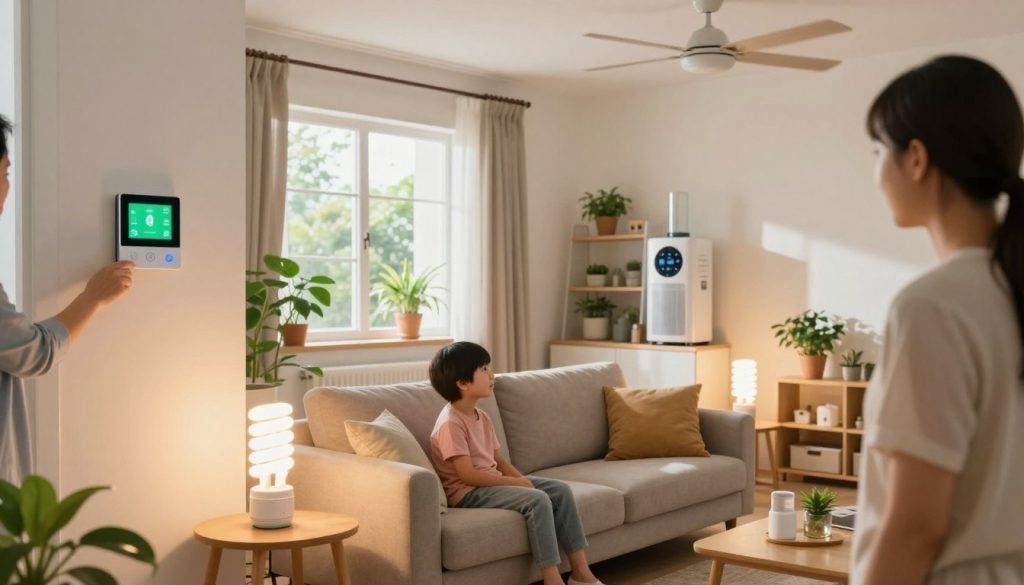
Air leaks can waste a lot of energy. You can find them by feeling for cool air near doors and windows. Using weatherstripping or caulk can help a lot.
These items are cheap and easy to find at hardware stores. They help keep your home comfortable by stopping air from escaping.
Adjust Your Thermostat When You Sleep or Leave Home
Heating and cooling systems use a lot of energy. Lowering your thermostat by 7–10 degrees for a few hours can save a lot. It doesn’t make your home uncomfortable.
Use Ceiling Fans to Improve Comfort Without Lowering the Thermostat
Remember, ceiling fans cool people, not rooms. They make you feel cooler, so you can keep your thermostat higher in summer. Always turn them off when you leave a room.
Wash Clothes in Cold Water and Air-Dry When Practical
Using hot water for laundry uses a lot of electricity. Washing in cold water saves a lot of energy. Air-drying clothes when you can saves even more.
Unplug Electronics and Eliminate Standby Power
Many devices use power even when off. This “vampire energy” adds up over time. Using a smart power strip can save a lot of energy. It turns off all devices with one switch.
Efficient Home Heating and Cooling Tips
Controlling your home’s climate can cut down your utility bills. By using efficient home heating and cooling tips, you can keep your home comfy while saving energy. These tips help you reduce energy consumption in your home without losing comfort.
Replace or Clean HVAC Filters Regularly
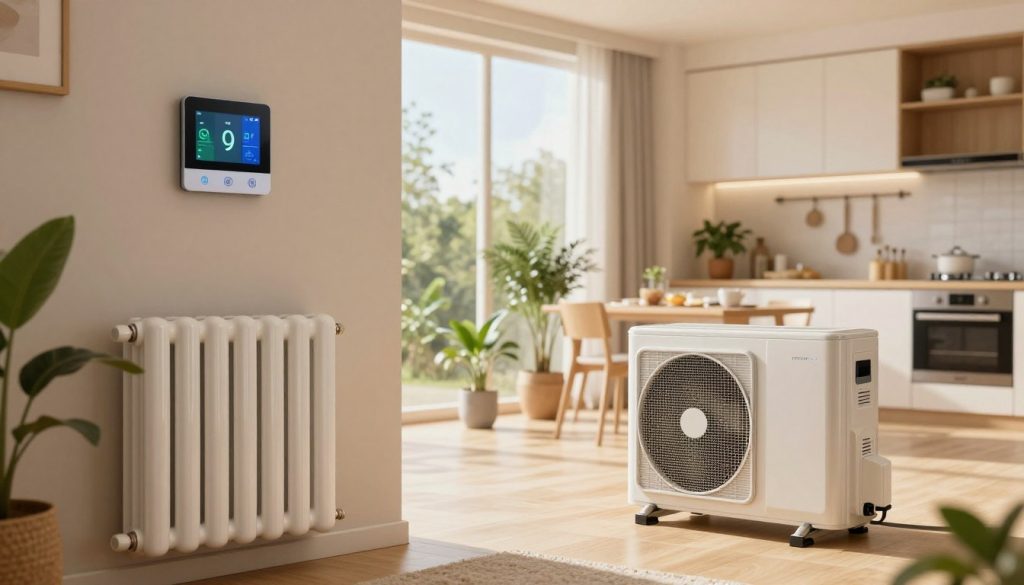
Your HVAC system needs good airflow to work best. Check your air filters every month to avoid clogs. You might need to replace or clean them, depending on your home and filter type.
Schedule Professional Heating and Cooling Maintenance
Even with good care, your system needs a pro check-up yearly. A certified tech can find and fix issues that make your system work too hard. Regular maintenance keeps your system efficient, saving you money over time.
“Properly maintained heating and cooling equipment lasts longer, performs better, and uses less energy to keep your home comfortable throughout the seasons.”
Use a Programmable or Smart Thermostat Correctly
A smart thermostat is great for managing your home’s temperature. Set it to adjust the temperature when you’re not home or asleep. This stops your system from heating or cooling an empty house, saving on energy bills.
Improve Attic Insulation and Duct Efficiency
Air leaks in your attic or ducts can waste conditioned air. Sealing these gaps makes your system more efficient. Proper insulation keeps your home at a steady temperature, saving energy.
Choose Room-Specific Cooling and Heating Strategies
You don’t need to heat or cool every room the same. Close doors to unused rooms to focus your system’s energy. This way, your system works better in the rooms you use most, reducing energy consumption in your home.
| Maintenance Task | Frequency | Primary Benefit |
|---|---|---|
| Filter Inspection | Monthly | Improved Airflow |
| Professional Tune-up | Annually | System Longevity |
| Duct Sealing | As Needed | Reduced Energy Waste |
| Thermostat Adjustment | Daily | Lower Utility Bills |
Energy-Efficient Home Ideas for Appliances, Lighting, and Water
Turning your home into a green model starts with small daily changes. By using energy-efficient home ideas, you can help the planet and save money. Making simple changes to your lighting, water use, and appliances can make a big difference.
Switch to ENERGY STAR LED Bulbs
Improving your lighting is easy. LED bulbs use 75 percent less energy than old bulbs. They also last much longer, saving you money and time on replacements.
Turn Off Lights and Use Daylight More Often
One great eco-friendly home energy tip is to turn off lights when you leave a room. Use natural light by opening curtains or blinds. This cuts down on artificial light use and makes your home brighter.
Run Dishwashers and Laundry Appliances Only with Full Loads
Using your appliances fully is key to their efficiency. Running them with just a few items wastes water and energy. Always wait for a full load to save on resources.
Set Your Water Heater to a Safe, Efficient Temperature
Many water heaters are set too high. A safe temperature is around 120°F. This lowers energy use and keeps your water safe from scalding.
Upgrade High-Use Appliances When Replacement Becomes Necessary
When an appliance needs replacing, choose a more efficient one. Look for ENERGY STAR models to save energy and money. Investing in new tech is a smart long-term choice.
| Action | Primary Benefit | Difficulty Level |
|---|---|---|
| Switching to LEDs | Lower electricity use | Very Easy |
| Running full loads | Water and energy savings | Easy |
| Adjusting water heater | Reduced standby loss | Moderate |
| Buying ENERGY STAR | Long-term efficiency | Moderate |
Conclusion
Small changes can make a big difference in your budget. You don’t need to spend a lot on big renovations. Simple habits can lead to a more efficient lifestyle.
Try these energy-saving tips for your home to cut down on power use. Adjust your thermostat, seal drafts, and run full loads on appliances. These actions help save money over time.
Improving your home lighting is also key. Switch to ENERGY STAR LED bulbs to use less electricity than old incandescent bulbs. This change makes your home brighter and saves on bills.
Start with two or three changes today. Keep track of your energy use for a few months to see how you’re doing. Plan to replace old appliances when they need it. Your efforts will make your home comfortable and green for years.