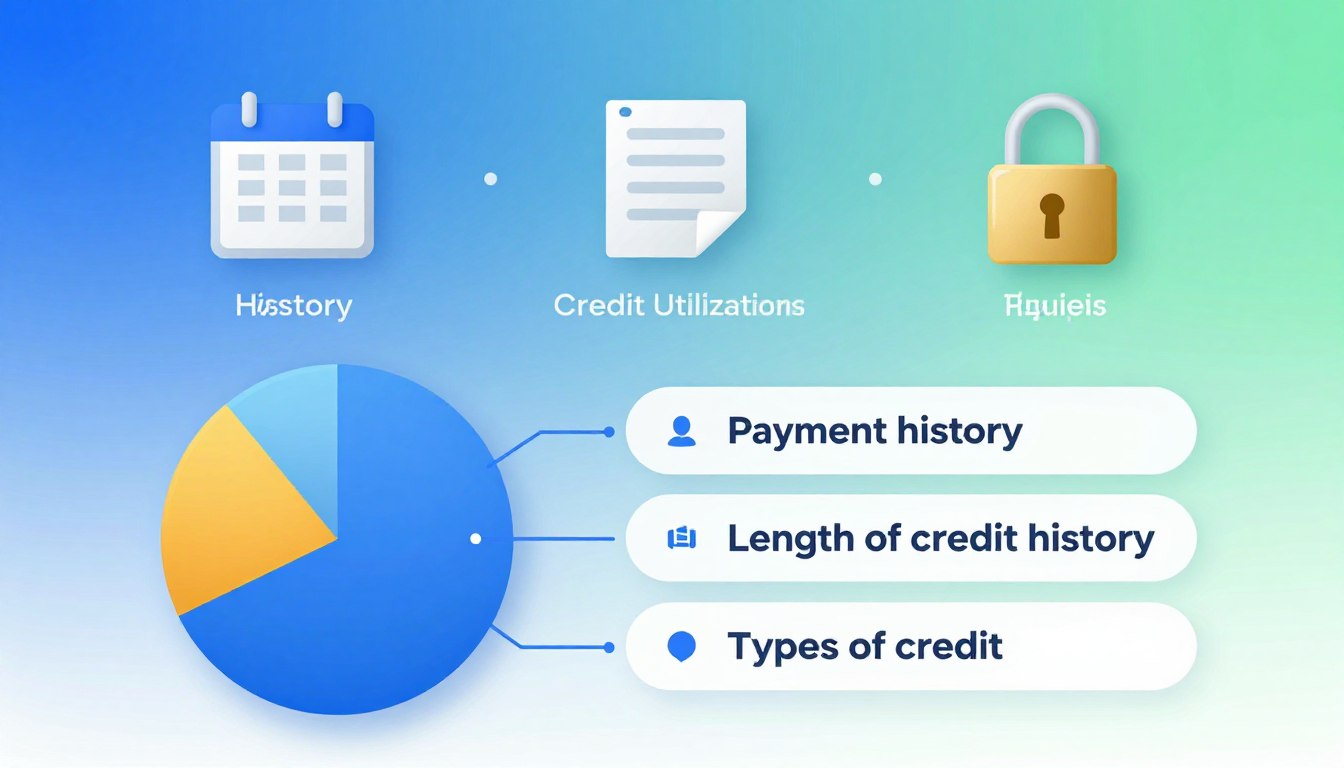
Did you know nearly one in five Americans has an error on their financial reports? This fact shows why knowing your financial health is key for your future.
Looking at your financial profile can feel overwhelming. But, understanding what influences credit score helps you control your borrowing power.
In this guide, we explain the credit score factors in simple terms. We’ll show how your payment history, how much you use your credit, and other factors affect your credit score.
Learning about these credit score factors helps you make better choices. These choices can save you money in the long run. Let’s explore the important details for your wallet.
Key Takeaways
- Payment history is the biggest factor in your financial rating.
- Keeping your balances low improves your profile.
- Your account history shows lenders you’re reliable over time.
- Having different loans and cards can help your score.
- Checking your reports often helps you fix errors fast.
Credit Score Factors Explained: How Scoring Models Read Your Credit Profile
Learning how your financial habits shape your credit profile is key. Scoring models scan your history to judge your risk. They look at specific factors affecting credit score to judge your reliability as a borrower.

Payment History Shows Whether You Pay on Time
Your payment history is a big part of the puzzle. It shows if you meet your financial obligations on time.
How Late Payments Affect Your Score
Missing a payment can hurt your score. Even one payment thirty days late can drop it a lot. The longer it’s late, the bigger the hit to your profile.
Steps to Build a Stronger Payment Record
Being consistent is the best way to improve this area. Set up automatic payments or use calendar alerts to avoid missing deadlines. A string of on-time payments is a big plus for your score.
Credit Utilization Reveals How Much of Your Available Credit You Use
This factor looks at your current balances and total credit limits. It’s a key part of understanding credit score factors that many overlook.
Why Lower Utilization Usually Helps
Keeping balances low shows you’re not overextending. A lower ratio means you manage debt well. Experts say to keep it below thirty percent for a healthy score.
Ways to Reduce Your Reported Balances
Paying down debt throughout the month can lower reported balances. You might also ask for a credit limit increase. This can instantly lower your ratio if you spend the same amount.
Length of Credit History Reflects Your Experience With Credit
The age of your accounts shows your experience level. A longer history gives lenders more data to judge your long-term habits.
How Account Age Is Measured
Models consider your oldest, newest, and average account ages. A longer average age is seen as stable. Keeping old accounts open can help your score.
Why Closing Older Accounts Can Matter
Closing an old account can shorten your average age. It also reduces your total available credit, which could raise your ratio. Think twice before closing a long-standing account, even if it has no annual fee.
Credit Mix Shows How You Manage Different Account Types
Lenders like to see you can handle various debts. A diverse portfolio shows you’re versatile in managing finances.
Revolving and Installment Credit in Your Credit Score Breakdown
Revolving credit includes items like credit cards, where your balance changes monthly. Installment credit includes loans with fixed payments, like auto loans or mortgages. A mix of both can be a plus for your score.
Why You Should Not Open Accounts Just to Add Variety
While a good mix is helpful, don’t open new accounts just to improve your score. Opening too many at once can lead to hard inquiries and lower your average age. Focus on managing the credit you have, as the factors affecting credit score are best managed through patience and steady habits.
Three More Factors Affecting Your Credit and Practical Ways to Improve Them
Many things affect your credit score breakdown beyond just paying on time. Lenders also look at how you handle new credit and past financial issues. Knowing these factors that impact credit score helps you manage your finances better.

New Credit Applications Can Signal Increased Borrowing Risk
Hard Inquiries Versus Soft Inquiries
When you apply for a loan or credit card, the lender checks your report. A hard inquiry can slightly lower your score. But, a soft inquiry when you check your score or get pre-approved offers doesn’t affect it.
| Inquiry Type | Triggered By | Impact on Score |
|---|---|---|
| Hard Inquiry | Loan/Credit Application | Potential Decrease |
| Soft Inquiry | Personal Check/Marketing | No Impact |
| Periodic Review | Existing Creditor | No Impact |
How to Apply for Credit Without Unnecessary Score Damage
Don’t apply for many credit products at once. This can hurt your score. Research well before applying to make sure you qualify.
New Accounts Can Affect Your Average Account Age
How New Credit Accounts Influence Your Profile
Opening new accounts lowers your average credit history age. Lenders like a long, stable history. So, too many new accounts can be risky.
When Opening a New Account May Make Sense
Opening a new account can be smart for your future. Adding different credit types can improve your mix. If you manage it well, the benefits can outweigh the short-term age drop.
Derogatory Marks and Public Records Can Have a Serious Impact
Examples of Negative Information on Your Reports
Derogatory marks like bankruptcies or foreclosures hurt your score for years. They warn lenders about past financial struggles.
How to Dispute Errors and Recover Over Time
If your report has errors, you can dispute them. Provide proof to remove wrong marks. Keep making on-time payments to slowly improve your score.
Conclusion
Understanding your financial health is key. Your payment history, balances, and account age are what lenders look at. These show if you’re reliable with money.
Start by getting your reports from Equifax, Experian, or TransUnion. Look over these to find any mistakes that could hurt your score. If you find errors, report them right away to keep your score safe.
Improving your credit score is about making small, consistent changes. Always pay bills on time and keep your credit card balances low. Try not to apply for too much credit, as this can hurt your score.
Building a good financial reputation takes time. Making smart, steady choices is the best way to improve your credit over time. Keep up with your habits to reach your financial goals.